
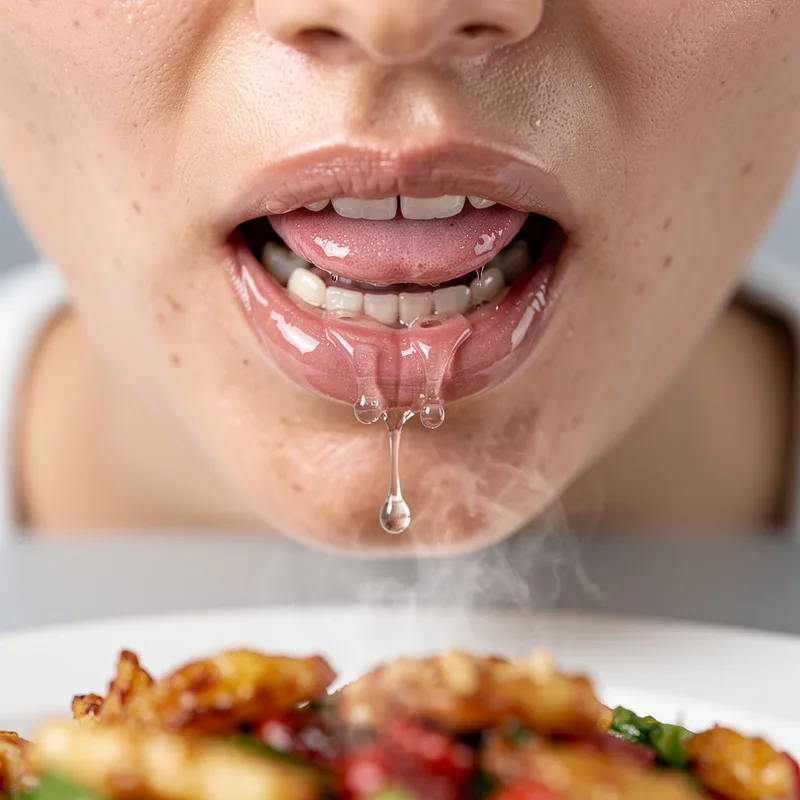
salivation
 1
4.1
1
4.1

- noun
- /ˌsælɪˈveɪʃən/
- Specialized
- Excessive salivation led to dehydration, exhaustion, and stress.
- stimulate salivation
- increase salivation
Loading YouTube…
Watch on YouTubeI mean, as I'm telling you that I am, I don't know about you, but I am feeling my salivation.
- I mean, as I'm telling you that I am, I don't know about you, but I am feeling my salivation.
Examples
-
When someone experiences disgust, physiological changes may include nausea, salivation, and a decreasing heart rate.
Academic text (1999) -
Its umeboshi (sour plum) in the center helps preserve the rice, stimulates salivation, and has medicinal properties; citric acid aids digestion.
Academic text (1994) -
The lime promotes salivation, and as they chew the nut, they spit out.
Blog text (24) -
Chewing gum promotes salivation, which neutralizes acid, soothes the esophagus, and washes acid back down to the stomach.
Blog text (19) -
The patient was given inj. glycopyrrolate 0.2 mg intramuscularly half an hour before shifting to the operation theatre to control his excessive salivation (approx. 1-2 litres/day).
Academic text (2007) -
Motion sickness is often accompanied by excess salivation.
-
Excessive salivation led to dehydration, exhaustion, and stress.
-
The sweetness and acidity can stimulate salivation to clear your throat and sinuses.
How Much
- Specialized
1
4.1

- Specialized
7
3.2
Surface Forms
Morphology
Etymology
Salivation comes from the old Latin word saliva, meaning 'spit'. So salivation is simply the making and release of that mouth liquid, which explains why the word means producing saliva.