
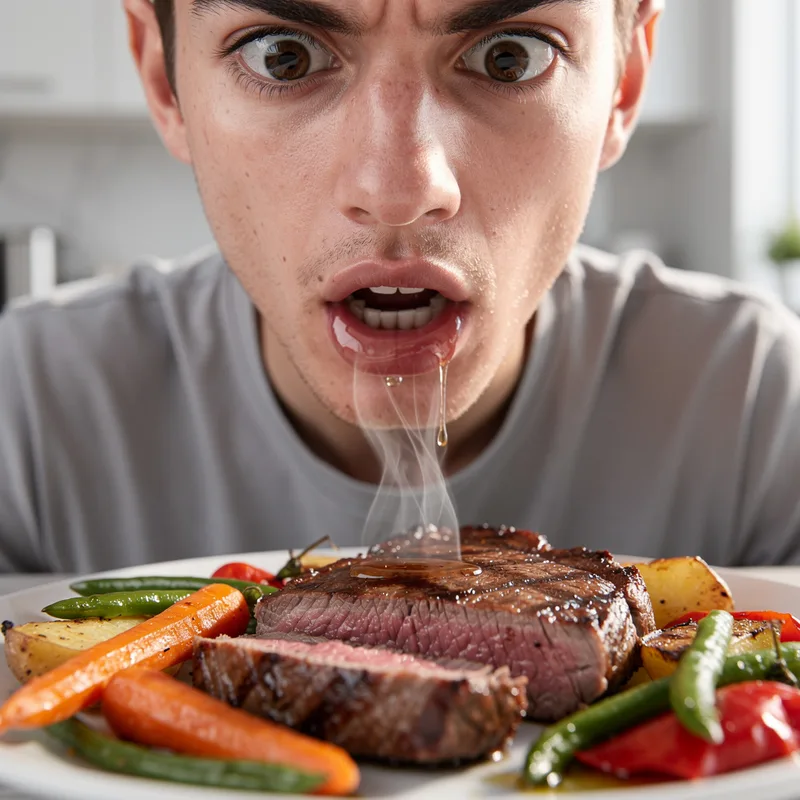
to salivate
 5
4.3
5
4.3

- verb
- /ˈsælɪˌveɪt/
- The delicious aroma of roasted chicken made him salivate as he entered the kitchen.
- makes me salivate
- start to salivate
- began to salivate
Loading YouTube…
Watch on YouTubeIt is making me salivate a lot from the tartness.
- It is making me salivate a lot from the tartness.
- Now, the first incredible finding he made is the fact that the dog now, in the presence of the Belle alone, will start to salivate.
- My mouth is salivating a lot extra now.
- I mean, I'm literally salivating like Pavlov's dog walk to the coffee maker to make said cup of coffee and then I realize I forgot to buy coffee.
Examples
-
And I think, as you all know, the dog now will salivate and get ready to eat when he hears the bell.
-
I'm salivating already.
-
The very thought makes my mouth salivate.
Fiction book (1992) -
My immediate reaction would be to salivate.
Fiction book (1995) -
"The table was already set, and the smell of stew from the kitchen made me salivate."
Fiction book (2002) -
And the fries; my mouth is salivating right now just thinking of them.
Blog text (29) -
As a big bread lover, I always salivate whenever I see photos of all those baked goods from your bakery!
Blog text (6) -
The smells in the market, things frying and festering, made him salivate.
Fiction book (1996) -
Joe's sister, Winnie, and her husband, Thomas, were baking baklava, and he was starting to salivate.
Fiction book (2000) -
After sinking this forkful into the marinara, I guided it into my mouth, which was salivating in anticipation.
Blog text (16)
Synonyms
 49
2.1
49
2.1
To let saliva flow from the mouth without meaning to

To let liquid from the mouth come out by accident

Want food so much that you cannot stop your mouth from filling with saliva
How Much
49
2.1
 5
4.3
5
4.3
Surface Forms
Morphology
Etymology
Salivate comes from the Latin word saliva, meaning 'spit' or 'saliva'. So to salivate is literally to make saliva in your mouth, as when you see or smell tasty food.