
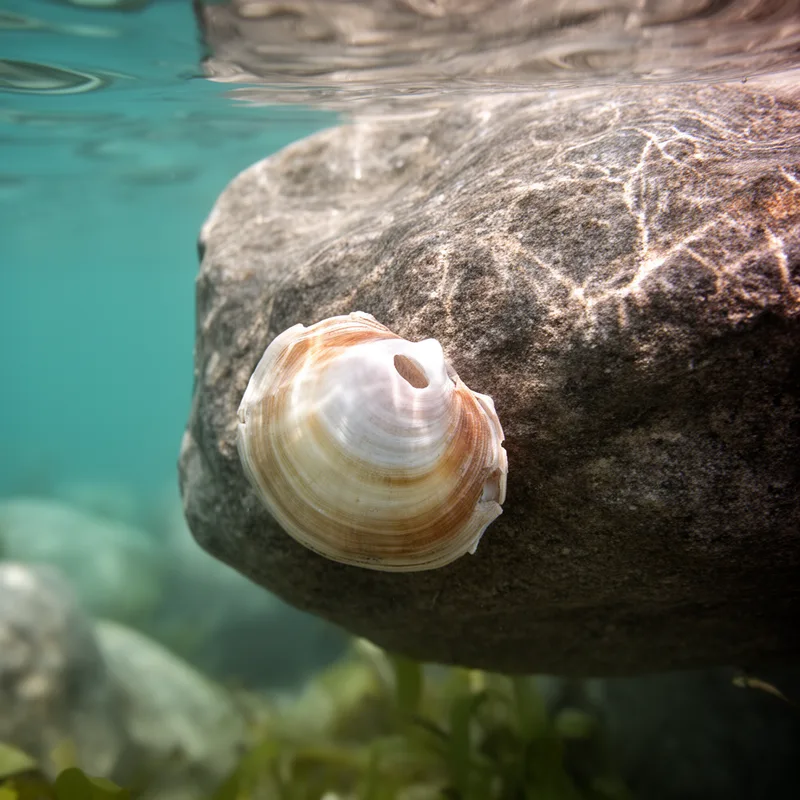
saddle oyster
- noun
- /ˈsæd.əl ˈaɪ.stər/
- Specialized
- We found a saddle oyster clinging to the underside of the rock at low tide.
Examples
-
I found a saddle oyster on the beach.
-
The shell of the saddle oyster is delicate and easily broken.
-
Marine biologists studied the habitat of the saddle oyster along the coastal reefs.
-
Look at that saddle oyster!
-
Marine biologists studied the habitat of the saddle oyster along the coastal reefs.
-
We found a saddle oyster clinging to the underside of the rock at low tide.
-
The shell of the saddle oyster is delicate and easily broken.
Synonyms
A sea animal with two thin shells whose right shell has a deep notch and that often sticks to rocks

A sea animal with a thin shell that sticks to rocks or other shells
Surface Forms
Morphology
This is a straightforward noun–noun compound where 'saddle' modifies 'oyster', so a B1 learner who knows both words will readily infer it denotes a kind of oyster with a saddle‑like shape or feature. Although the full zoological detail (the notched valve) is technical, the basic meaning 'a type of oyster' is compositionally derivable from the constituents.
Etymology
The name saddle oyster may come from the shell's shape: one shell is deeply notched so the animal can sit on a rock like a tiny saddle. That's why the name points to a thin sea animal called an oyster that holds on to rocks.

