

rose beetle
- noun
- UK
- Gardeners often struggle with rose beetle infestations that damage their prized rose bushes.
Examples
-
The metallic green color of the rose beetle makes it easy to spot among the leaves.
-
Both larvae and adults of the rose beetle can cause significant harm to ornamental plants.
-
The rose beetle is often found in gardens.
-
Many rose beetles thrive in warm climates.
-
Gardeners often struggle with rose beetle infestations that damage their prized rose bushes.
-
Both larvae and adults of the rose beetle can cause significant harm to ornamental plants.
-
The metallic green color of the rose beetle makes it easy to spot among the leaves.
Synonyms

Shiny green beetle in Europe that eats rose flowers and whose young beetles eat plant roots
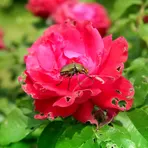
A small insect that eats the leaves and flowers of roses
Surface Forms
Morphology
The noun-noun compound 'rose beetle' transparently combines 'rose' and 'beetle' to refer to a beetle associated with roses (e.g., feeding on or found on rose plants). This straightforward compositional pattern is common in English and other languages, so a B1 learner who knows both constituent words would readily infer the meaning.
Etymology
The name rose beetle comes from gardeners: the beetle is often found eating the leaves and flowers of the rose, so people named it for the plant it attacks. So the name tells you it is a small insect that can 'damage' rose plants.

