

Cetonia aurata
- noun
- Specialized
- Gardeners often notice Cetonia aurata feeding on the petals of their roses each summer.
Examples
-
The larvae of Cetonia aurata are known to cause damage to the roots of ornamental plants.
-
The metallic sheen of the Cetonia aurata makes it one of the most eye-catching beetles in European gardens.
-
The Cetonia aurata is often seen in gardens during the summer.
-
Have you ever spotted a Cetonia aurata in your backyard?
-
Gardeners often notice Cetonia aurata feeding on the petals of their roses each summer.
-
The larvae of Cetonia aurata are known to cause damage to the roots of ornamental plants.
-
The metallic sheen of the Cetonia aurata makes it one of the most eye-catching beetles in European gardens.
Synonyms
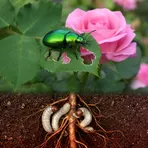
A small shiny green beetle whose young eat roots and adults eat leaves and flowers
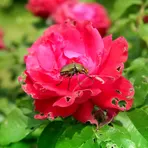
A small insect that eats the leaves and flowers of roses
Surface Forms
Morphology
Cetonia + aurata
This is a Latin scientific name (a binomial) rather than a normal English phrase, and one constituent ('aurata') is not a known English word for a B1 learner. Even if a learner recognized 'Cetonia' as a beetle, the species epithet and taxonomic naming conventions are not transparently compositional in English, so the specific meaning (a metallic green/rose chafer) cannot be reliably derived from the parts. Therefore it is not predictable for typical learners.
Etymology
Cetonia aurata may come from old words that point to its shiny colour: Cetonia and aurata, with 'aurata' meaning 'golden'. That's why the name fits this common rose chafer, which looks bright, green and shiny.

