
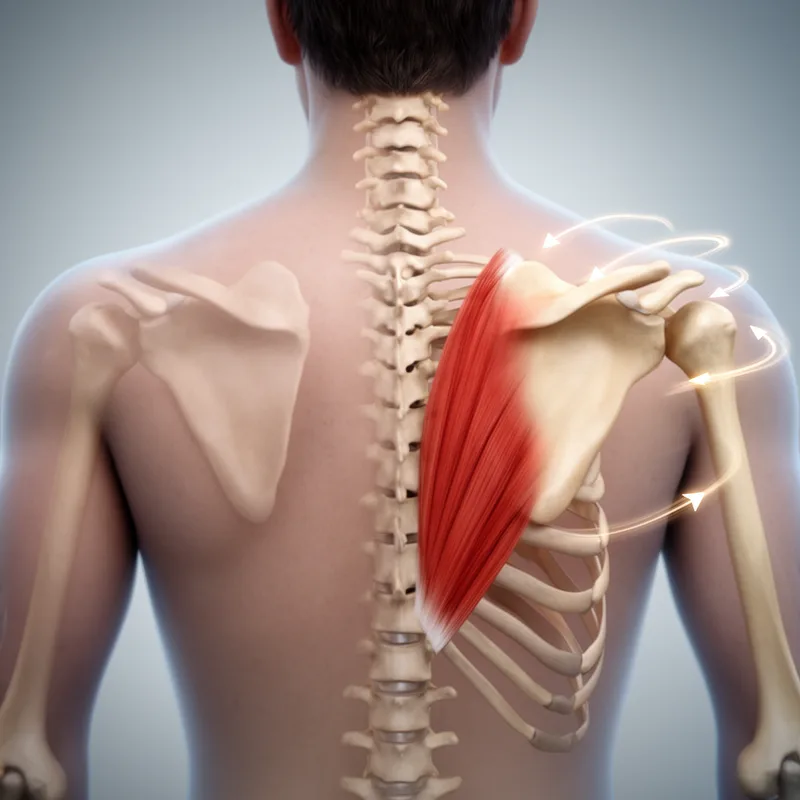
rhomboideus major muscle
- noun
- /ˌrɑːmboʊˈɪdiəs ˈmeɪdʒər ˈmʌsəl/
- Specialized
- The rhomboideus major muscle helps retract the shoulder blades during rowing exercises.
Examples
-
Physical therapists often focus on strengthening the rhomboideus major muscle to improve posture.
-
An injury to the rhomboideus major muscle can cause pain between the shoulder blades.
-
The rhomboideus major muscle is essential for upper back stability.
-
Many athletes strengthen their rhomboideus major muscles to improve posture.
-
An injury to the rhomboideus major muscle can cause pain between the shoulder blades.
-
Physical therapists often focus on strengthening the rhomboideus major muscle to improve posture.
-
The rhomboideus major muscle helps retract the shoulder blades during rowing exercises.
Synonyms

A back muscle that pulls the shoulder blade toward the spine

A muscle in the upper back that pulls the shoulder blade toward the spine
Surface Forms
Morphology
The noun phrase is largely compositional: 'rhomboideus' (rhomboid-shaped) + 'major' (larger) + 'muscle' yields the sense 'the larger rhomboid-shaped muscle'. However, 'rhomboideus' is a technical/Latin anatomical term and the specific functional information in the definition (e.g. connecting scapula to spine and drawing it toward the spine) is not predictable from the parts alone, so some domain knowledge is required.
Etymology
Rhomboideus major muscle comes from words that mean a 'diamond' shape and 'large', because rhomboideus means a diamond shape and major means bigger. The muscle is the larger diamond-shaped muscle that pulls the shoulder blade toward the spine, so its name describes both its shape and its job.

