

to revegetate


 1
6.8
1
6.8
- verb
- /ˌriːˈvɛdʒɪˌteɪt/
- Specialized
- What the alarmists never mention is that pasture land soon degrades and that 32% of cleared land has been revegetated either by plantation timber or natural regrowth.
- revegetate disturbed land
Examples
-
The current announcement informs listeners that biosolids are being used to revegetate the mine site.
Academic text (2001) -
Hardy and well-adapted, these plants help hold soil in place and revegetate lands denuded by wildfire or disturbed by mining.
Academic text (2000) -
The compost is then used as a cover material to revegetate the county's landfill.
Academic text (2000) -
This program is primarily targeted at revegetating degraded areas in the central dry zone of Myanmar.
Academic text (2000) -
Biosolids and wood residuals from mountain resort communities are used to revegetate disturbed land at a high-altitude molybdenum mine.
Academic text (2001) -
But their attitude did a dramatic about-face when elk returned to the newly revegetated land, a welcome sight to the many avid hunters in the area -- and to the mine's workforce.
Academic text (2001) -
Parents also indicated plans for completing interior construction in order to reduce interior dust, encapsulating or removing siding, revegetating the yard, and possibly providing shrubbery or some other type of barrier that would restrict access to soils near the house.
Academic text (1993) -
As our field data document, Sv, Sb, and Se are all good recruiters, capable of filling canopy openings with seedlings and rapidly revegetating bare sites.
Academic text (2001) -
In this demonstration, Dr. Sopper made clear that municipal biosolids, when tested and applied according to proper guidelines, can be used to revegetate mine-damaged land in an "environmentally safe manner with no adverse effects on the vegetation, soil, or groundwater quality, and do not pose any significant threat to animal or human health."
Academic text (1995) -
The city created a plan to revegetate the park after construction ended, ensuring that plants would grow back quickly.
Synonyms
 14
3.3
14
3.3
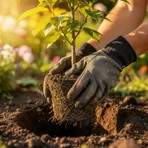
To put a tree, flower, or seed back into the ground after moving it
 11
5.3
11
5.3
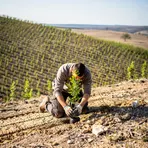
To plant trees on land that did not have them before
 6
5.5
6
5.5
Bring something back to a better or original state
 1
4.4
1
4.4
To plant trees on land where a forest was cut down or destroyed
 1
4.2
1
4.2
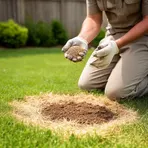
To plant seeds again to restore grass or crops
 1
5.1
1
5.1
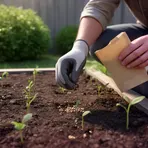
Plant seeds again in the same place when the first ones do not grow

To make a place or activity more natural and full of plants by planting and other steps

To plant trees on land that lost its forest
Antonyms

How Green
1
4.4

- Specialized
1
6.8
14
3.3
7
3.7
68
2.0
Surface Forms
Morphology
Etymology
The word revegetate begins with re- ('again') and uses the part vegetate, from a root meaning 'to grow' or 'be full of life' that you see in vegetation and vegetable. So to revegetate land is to make it 'grow plants again' and bring back plant life.