
to vegetate
 1
6.0
1
6.0

- verb
- /ˈvɛdʒɪˌteɪt/
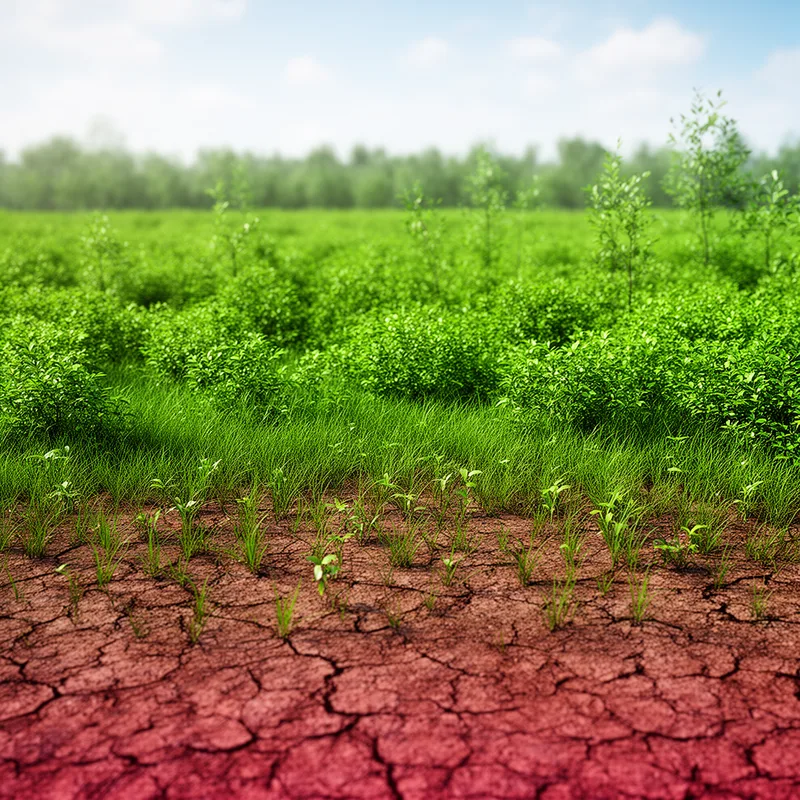
- The community worked together to vegetate the barren land with native plants.
- vegetated habitats
- vegetated roof
- vegetated areas
Examples
-
Conversely, vegetated estuarine habitats have long been recognized for their important ecosystem services (Thayer et al. 1978).
Academic text (2012) -
The district covers an area of 8,810 km², of which 2,860 km² are vegetated.
Academic text (1993) -
The design of restoration sites as experiments can simultaneously vegetate the site and improve knowledge.
Academic text (2001) -
Permeability values were generally higher in more highly vegetated land-cover types.
Academic text (2017) -
Productivity of vegetated habitats often exceeds that of adjacent areas.
Academic text (2000) -
Since 1945, 17% of the planet's vegetated surface has been irreversibly degraded.
-
Swarthmore College (Pennsylvania), for example, began its vegetated roof program by retrofitting a small storage building.
Academic text (2005) -
Although the channel is actively eroding, most of the impounded sediments remain vegetated in place in the riparian zone.
Academic text (2010) -
The predominantly fiat, paved trail traveled along a highly vegetated route and afforded occasional views of the adjacent creek.
Academic text (2003) -
Finally, the ideal geographic environment is one that is arid to semiarid, wherein ground surfaces are sparsely vegetated.
Academic text (2000)
How Vegetated
801
1.0
 1
6.0
1
6.0
Surface Forms
Morphology
vegetate = vegetation (transparent) = veget + ate
The sense 'to produce vegetation / be planted' maps directly onto the base 'vegetation' with the verb-forming suffix '-ate'.
Etymology
Vegetate comes from the Latin vegetare, meaning 'to make lively', and connects with vegetation. That's why when land vegetates it becomes covered with plants and new life.