

retinal purple
- noun
- /ˈrɛtɪnəl ˈpɜrpl/
- Specialized
- When light strikes retinal purple, it triggers a chemical reaction that enables vision in low light.
Examples
-
Scientists studied how retinal purple regenerates after being bleached by intense illumination.
-
The discovery of retinal purple was crucial in understanding how vision works at night.
-
Exposure to bright light causes retinal purple in the eye to break down rapidly.
-
The retinal purple in our eyes helps us see in low light.
-
Scientists study retinal purple to understand vision better.
-
The retinal purple in our eyes allows us to see under dim lighting conditions.
-
Research shows that retinal purple is essential for converting light into visual signals in the retina.
Synonyms


 1
9.9
1
9.9
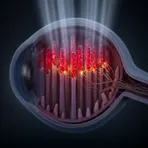
A red pigment in the eye's rod cells that starts the process of seeing in low light
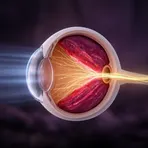
A reddish purple substance at the back of the eye that helps you see in dim light
Surface Forms
Morphology
retinal + purple
Knowing 'retinal' (relating to the retina) and 'purple' (a colour), a B1 learner can infer this refers to a purple substance associated with the retina, so part of the meaning (a coloured retinal substance) is derivable. However the crucial functional information — that it is the photopigment rhodopsin responsible for the first step of light perception — is technical and not predictable from the constituents alone, so the term is only partially transparent.
Etymology
Retinal purple comes from a simple image: purple pigment in the back of the eye, with retinal showing the eye part and purple the colour, that fades when bright light hits it. That's why retinal purple means the red/purple light-sensing pigment in the eye, also called 'rhodopsin'.