
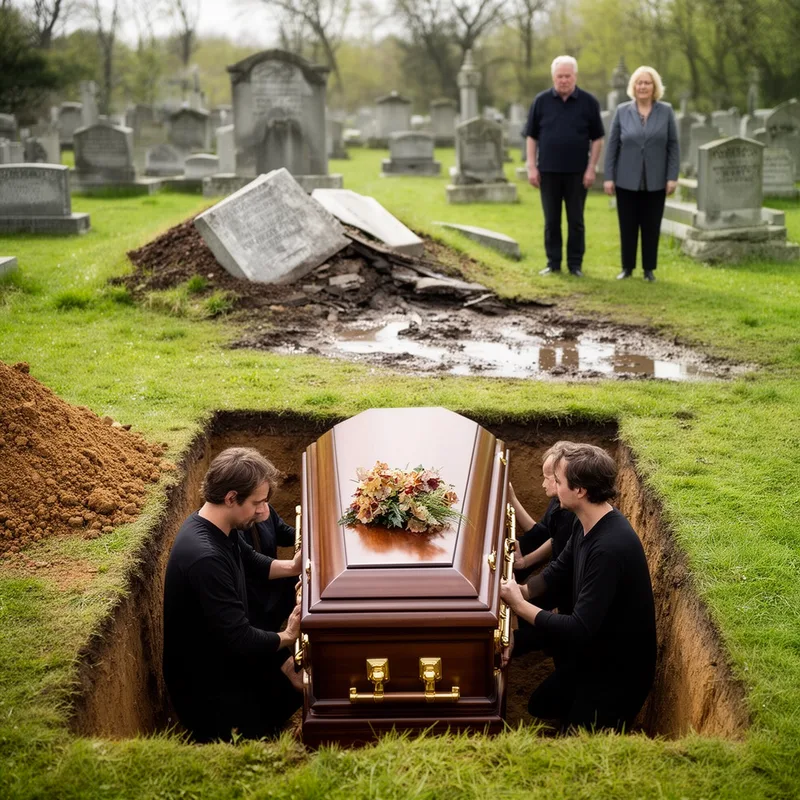
to reinter


 1
8.6
- verb
- /ˌriːɪnˈtɜːr/
- The remains of the soldiers were reinterred with full honors in a nearby cemetery after the excavation.
- reinter the remains
Examples
-
After the historical review, the ancient relics were carefully reinterred in their original burial site.
-
The bodies were carefully reinterred, according to Fortenberry, but some of the original structures remain. "Just out of sheer curiosity, we thought, why not try to get into the next chamber?" Fortenberry says.
Academic text (2009) -
Most of the bones that were not damaged appear to have been left alone or haphazardly reinterred.
Academic text (2009) -
"I don't know why they reinterred her today," Anya suddenly said with passion in her voice.
Fiction book (1994) -
A quick call to Woodland Mill Cemetery this morning confirmed that Mr. Buchanan was safely reinterred yesterday afternoon without incident.
-
In 1907, the U.S. Smelting, Refining and Mining Company offered to reinter the buried, with very few families agreeing.
Blog text (1) -
Despite cultural differences and the personal enmities Indians may have for one another, they share the desire to keep their ancestors resting in peace (not in pieces) as well as the desire to reinter those remains that have been disturbed.
Academic text (1996) -
Later, Forrest would be hoisted out of Elmwood and reinterred in his own park downtown, under a statue of himself riding a composite horse.
Fiction book (1996) -
The bones recovered so far will be reinterred in a graveyard vault by the current governor, Sir Richard Gozney, and the Reverend Raths in June.
Academic text (2009) -
In June, we will reinter my grandmother in the family plot at the local church.
Synonyms
 ∞
1.7
To put something in the ground and cover it with soil, for example a body or treasure
 30
4.0
To bury someone after a funeral
 12
8.1
To put a dead body in a tomb or enclose something as if buried
 9
8.7
To put a dead body in a grave
 3
6.3
To put a dead body or object back in the ground after people dig it up
 1
9.3
To put a dead person into a grave

To put a dead body in a grave or tomb

To put a dead body in a tomb during a ceremony
Antonyms

How Formal

Surface Forms
Morphology
Etymology
Reinter begins with re- meaning 'again' and uses inter meaning 'to bury', a word linked to 'earth'. So reinter means 'to bury again', usually in a new grave or place.