

to entomb
 11
8.1
11
8.1

- verb
- /ɪnˈtuːm/
- In the millions of intervening years, the resin turned into amber, and the ants entombed in the amber became fossils.
Loading YouTube…
Watch on YouTubeIn fact, a whole bunch of Shrikes multiplied and and eventually dies and is, you know, entombed in the time Tombs.
- In fact, a whole bunch of Shrikes multiplied and and eventually dies and is, you know, entombed in the time Tombs.
Examples
-
Many soldiers lie entombed in the war cemetery, honored for their sacrifice.
-
So, the world's most northerly lake was entombed beneath a near-permanent layer of ice some 2,400 years ago.
Blog text (19) -
The snow and ice would eventually settle over him, entombing him.
Fiction book (1996) -
There, she remains entombed beneath the mountains.
-
The dead remain still and safely entombed within the frozen ground.
Blog text (32) -
I wish to be entombed alongside Antony.
-
World War Il for us began at Pearl Harbor, and 1177 men still lie entombed in the battleship Arizona.
-
When the trees died and disappeared, the ants and mealybugs remained entombed in chunks of resin that were buried at the site.
Academic text (2006) -
A few things stayed entombed and lasted immensely longer: fossilized tools or teeth, roadbeds or graves.
Fiction book (1992) -
The archaeologists discovered a royal family entombed in the ancient burial site.
Synonyms
 ∞
1.7
∞
1.7
To put something in the ground and cover it with soil, for example a body or treasure
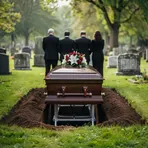 21
4.0
21
4.0
To bury someone after a funeral
 4
8.7
4
8.7
To put a dead body in a grave
 1
6.5
1
6.5
To put a dead body into a wooden box for burial or cremation
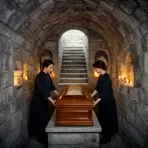

 1
9.9
1
9.9
To put a dead body in an underground stone room
 1
8.6
1
8.6
To put a dead body into a coffin for burial or cremation

To put a dead body in a tomb during a ceremony
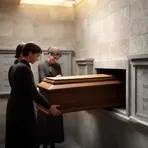
To put a dead person into a grave

To put a dead body in a grave or tomb
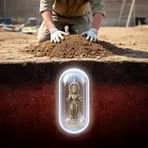
Enclose something completely to protect or bury it
Antonyms

How Enclosed

Surface Forms
Morphology
Etymology
The word entomb comes from en- meaning 'in' and tomb meaning 'burial place'. So to entomb someone is to put them 'in a tomb', and by extension to close or enclose something as if it were buried.