

to ravine
- verb
- /rəˈviːn/
 :
abrir barrancos
:
abrir barrancos
- Over centuries, the river ravined the landscape, leaving behind dramatic cliffs and gorges.
Examples
-
Heavy rains have ravined the hillside, making it difficult for plants to grow.
-
The once flat plain was ravined by streams that cut through the soft earth.
-
The river ravines the landscape over centuries.
-
Heavy rains ravined the hillside last spring.
-
Over centuries, the river ravined the landscape, creating deep, narrow valleys that dramatically changed the terrain.
-
The constant flow of water ravined the soft soil, carving out steep banks along the riverbank.
-
Heavy rains ravined the hillside, leaving behind a network of sharp descents and crumbling cliffs.
Synonyms
 2
3.4
2
3.4

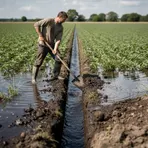
To dig a long, narrow trench to carry water away
 1
6.0
1
6.0
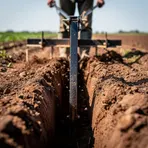
To make a long narrow cut in the ground


 1
7.2
1
7.2
To make deep channels in the ground by flowing water
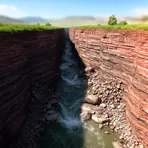
To cut downward into the land by a river or stream to make a deeper channel

To make a thin channel in something by water or wind
How Deep

Surface Forms
Etymology
Ravine as a verb comes from the same French root meaning 'to tear away', like the word ravage. So to ravine is to have water 'tear away' the land and make deep, narrow valleys.