
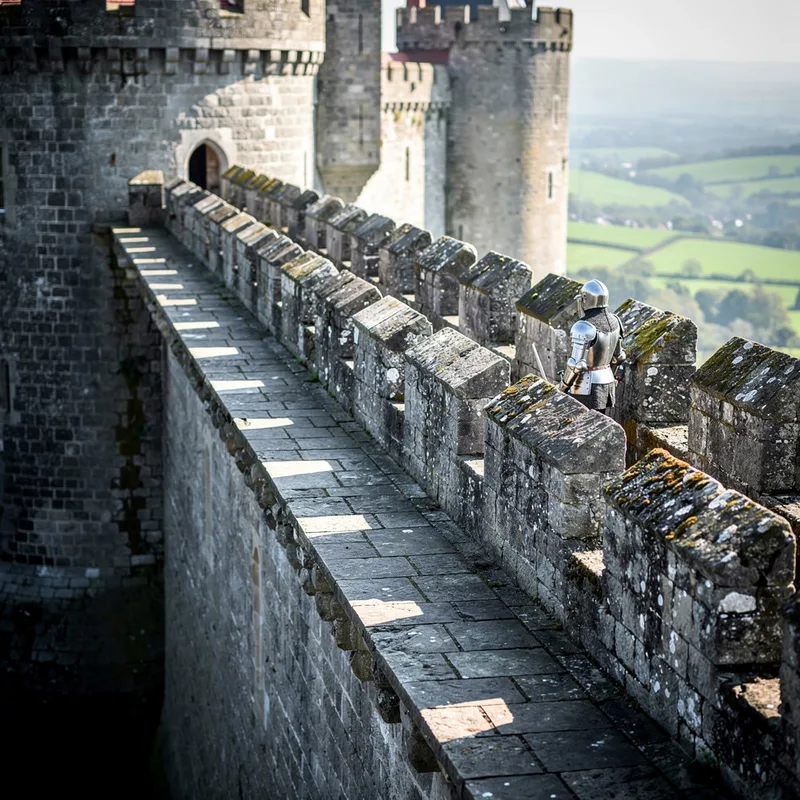
rampart
 12
8.8
12
8.8

- noun
- /ˈræmˌpɑrt/
- The castle's ramparts provided a panoramic view of the surrounding countryside while ensuring protection from invaders.
Loading YouTube…
Watch on YouTubeOur army man the airport, it Rand the ramparts.
- Our army man the airport, it Rand the ramparts.
Examples
-
Against what kind of enemy were these ramparts intended to defend?
Fiction book (1992) -
The city is protected by huge ramparts with an entrance through a large gate.
Academic text (1996) -
It's great huge earthwork rampart that goes along southern Denmark, northern Germany.
-
The dune guards the land like a rampart against the sea's aggressive ambitions.
Fiction book (1998) -
Testing confirmed that the rampart walls were coated with bone ash to make the patina more durable.
Academic text (2009) -
Directly before him stood the darkly dripping ramparts of the Old City.
Fiction book (1993) -
The sheer reddish rocks dropped straight into the water like the ramparts of a fortress.
Fiction book (2000) -
For a snapshot, I pose on the ramparts of Fort Ticonderoga.
Fiction book (1992) -
The fog was sweeping over the ramparts of the bridge, devouring the headlamps of cars.
Fiction book (2002) -
The city was walled with high diamite ramparts, with only hidden tunnels allowing ingress.
Fiction book (2000)
Synonyms
 ∞
1.0
∞
1.0
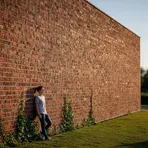
A vertical structure that divides or surrounds an area, like part of a building
 22
5.9
22
5.9
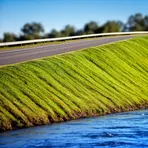
A raised bank of earth or stone that keeps water away and supports a road
 11
8.6
11
8.6
A strong wall built to protect a place like a city or ship
 9
6.6
9
6.6
A wall or earth mound built to protect a place from attack

A raised bank of earth built to support a road or defend a place
How Defensive

Surface Forms
Etymology
The word rampart comes from the old French rempart, a word for a wall built to 'protect' a town from attack. Think of a rampart as a wide, raised earth wall that 'keeps enemies back', which is why a rampart today means the protective wall around a fort or castle.