
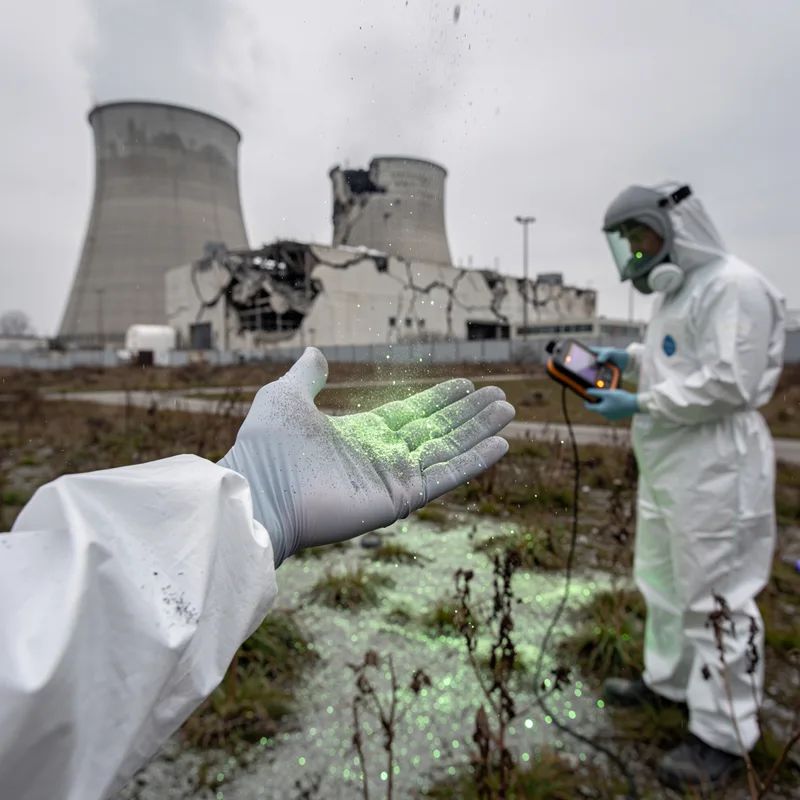
radioactive dust
 1
7.0
1
7.0

- noun
- /ˌreɪdiəʊˈæktɪv dʌst/
- If you have been exposed to radioactive dust, wash the exposed areas.
- radioactive dust cloud
Examples
-
The radioactive dust cloud produced in the blast does not rise as high as a classic mushroom cloud, but instead typically consists of a narrow column of vented hot gas surrounded by a broad base surge of ejecta and suspended fine particles, as shown in figure 6.
Academic text (2003) -
Kazakh horsemen churned the radioactive dust of the shoreline into a cloud that gradually obscured the box and St. August's face.
Fiction book (1996) -
And it rains back down to earth... as radioactive dust.
-
Radioactive dust is gonna rain all over the place.
-
We've flooded the place with radioactive dust and installed powerful ultraviolet lighting everywhere
-
But born in that swirling inferno of radioactive dust were things so horrible, so hideous, there is no word to describe "Them!"
-
The tons of radioactive dust that have mushroomed up into the ionosphere since the very first A-bomb test.
-
St. Ed remembered the dry yellow rain of radioactive dust that had fallen so terribly, so ironically, on August sixth, the Feast of the Transfiguration; yet nuclear ventings had occurred before without such disastrous consequences.
Fiction book (1993) -
Some 150,000 people, including 60,000 children, were affected by radioactive dust from the Chernobyl power plant accident, according to a report presented to the European Parliament in 1992.
-
Roads are watered to hold down radioactive dust, but the risk to short-term visitors is low if certain rules are obeyed, scientists say.
Synonyms
 34
7.5
34
7.5
Radioactive particles that fall to the ground after a nuclear explosion
 16
5.1
16
5.1
A substance that gives off invisible energy that can harm people and animals
Surface Forms
Morphology
The noun phrase is transparently compositional: 'radioactive' (emitting radiation) modifies 'dust' (tiny particles), so the phrase directly denotes tiny particles that are radioactive. This construction follows normal adjective + noun semantics and has close equivalents in other languages, so a B1 learner who knows both words will readily infer the meaning.
Etymology
The compound noun radioactive dust gives a simple picture: tiny bits of dust that are dangerous because they are radioactive, often after a nuclear explosion or accident. So, the term now means 'fine particles containing radioactive material that fall to the ground after a nuclear explosion or accident'.