
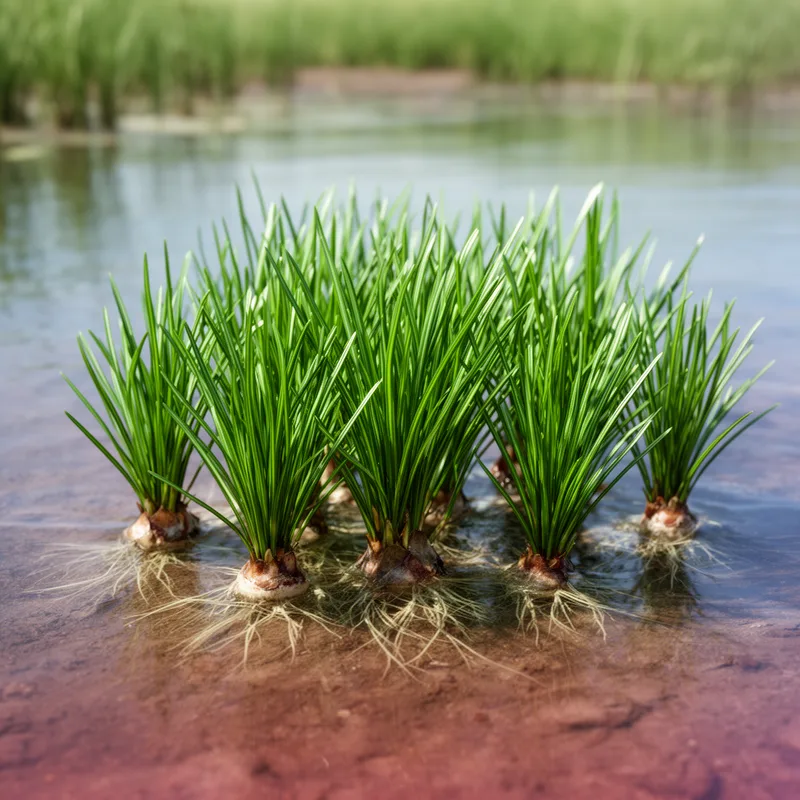
quillwort family
- noun
- /ˈkwɪlˌwɔrt ˈfæmɪli/
- Specialized
- The quillwort family contains only the genus Isoetes, which thrives in aquatic environments.
Examples
-
Some members of the quillwort family are found in temporary or seasonal ponds.
-
Botanists study the quillwort family to better understand the evolution of early vascular plants.
-
The quillwort family includes several unique species.
-
Many researchers study the quillwort family for its ecological significance.
-
Research into the quillwort family reveals important insights about aquatic plant adaptations.
-
Members of the quillwort family can often be found in wetlands where water levels fluctuate.
-
The quillwort family is notable for its distinctive underwater growth and reproductive structures.
Synonyms

A family of small water plants called quillworts that includes only one group, Isoetes

A group of small water plants called quillworts that make spores
Surface Forms
Morphology
The phrase is fully compositional: 'quillwort' names the plant and 'family' denotes a taxonomic grouping, so 'quillwort family' straightforwardly means the family of quillworts. This Noun+family pattern is a common, cross-linguistic way to name biological groups, so a B1 learner who knows both words can infer the meaning.
Etymology
Quillwort family comes from the plant name quillwort, which joins quill because the leaves look like thin quills and wort, an old word for 'plant'. So quillwort family means the 'group' of small water plants in the genus Isoetes that look like tiny quills.

