
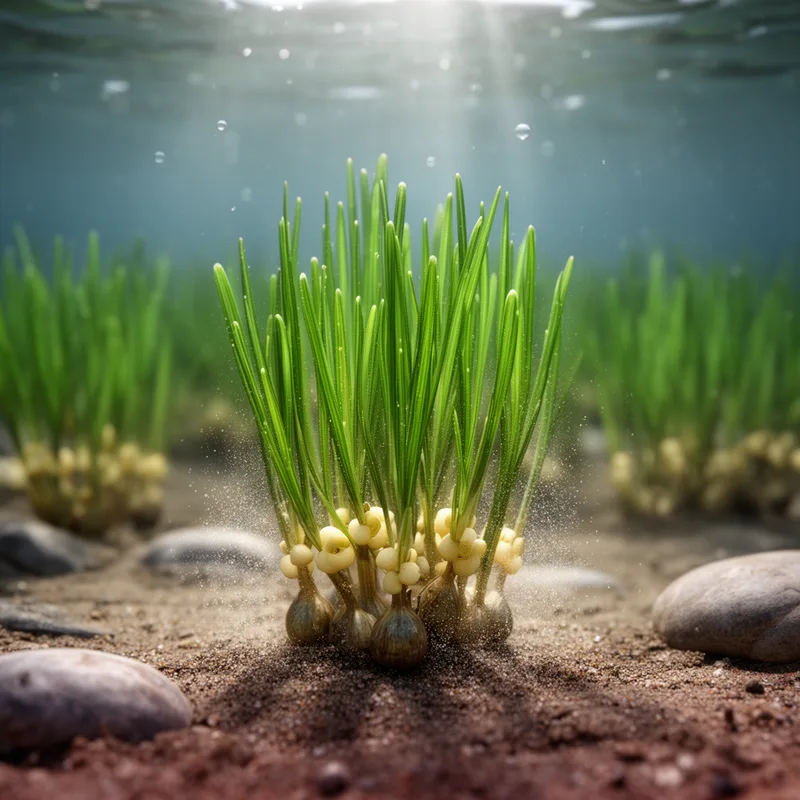
family Isoetaceae
- noun
- /ˈfæmɪli aɪsoʊˈiːteɪsi/
- Specialized
- The family Isoetaceae consists of small, spore-bearing plants commonly known as quillworts.
Examples
-
Members of the family Isoetaceae are found in freshwater habitats worldwide.
-
Although rare, several species in the family Isoetaceae are considered endangered due to habitat loss.
-
The family Isoetaceae includes many unique species.
-
Are there many members in the family Isoetaceae?
-
The family Isoetaceae consists of small, aquatic plants that thrive in freshwater environments.
-
Many species in the family Isoetaceae have adapted to survive in shallow waters.
-
The family Isoetaceae is characterized by spore-producing plants commonly found in wetlands.
Synonyms


 1
9.9
A small plant that grows in water or other wet places

A family of small water plants called quillworts that includes only one group, Isoetes
A group of small water plants like Isoetes that grow in ponds and marshes
Surface Forms
Morphology
The noun phrase straightforwardly combines 'family' (a taxonomic grouping) with the proper name 'Isoetaceae', so a learner who knows both constituents can infer it refers to the plant family called Isoetaceae. This compositional naming pattern is common across languages and follows standard scientific nomenclature, making the meaning immediately recoverable.
Etymology
Family Isoetaceae comes from the plant name Isoetes, called quillworts — tiny water plants with many thin, quill-like leaves like old pen feathers. The family name simply means 'the group of these plants', so it refers to this set of small, water plants that make spores today.