
quercitron oak
- noun
- /ˈkwɜːrkɪtrɒn oʊk/
- Archaic
 :
roble quercitrón
:
roble quercitrón
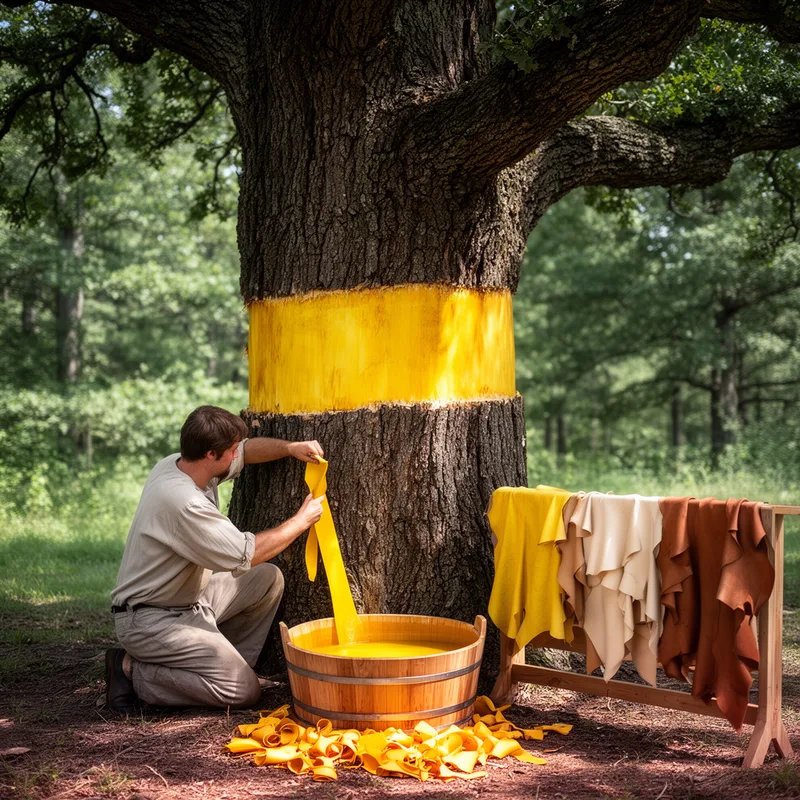
- Botanists identified the ancient tree as a quercitron oak due to its yellow inner bark.
Examples
-
The bark of the quercitron oak was once widely exported for use in tanning leather.
-
Traditional dyes made from quercitron oak are still prized by artisans today.
-
The quercitron oak is known for its unique bark.
-
Many quercitron oaks can be found in the eastern United States.
-
The bark of the quercitron oak is harvested for its use in dye-making and tanning processes.
-
Artisans use the yellow inner bark of the quercitron oak to create vibrant natural dyes.
-
In the forests of eastern North America, the quercitron oak stands out for its dark outer bark.
Synonyms


 1
4.1
1
4.1
A large tree from eastern North America with dark bark and leaves that have five points

A medium to large tree from eastern America that loses its leaves and has yellow inner bark used for dyeing

A large tree from eastern North America with dark outer bark and yellow inner bark called black oak

A medium to large tree that loses its leaves, with yellow inner bark used to make leather
Surface Forms
Morphology
The compound is directly compositional: 'quercitron' denotes a particular kind of oak with yellow inner bark and 'oak' names the tree category, so together they identify that specific oak species. This taxonomic/compound-noun formation follows predictable naming patterns and would be understandable to a learner who already knows both constituent meanings.
Etymology
Quercitron oak comes from Latin words quercus 'oak' and citron 'lemon-yellow', because the tree's inner bark is bright yellow and people used it to make dye and to tan leather, so the name points to its yellow bark and use.