
Quercus velutina
- noun
- Specialized
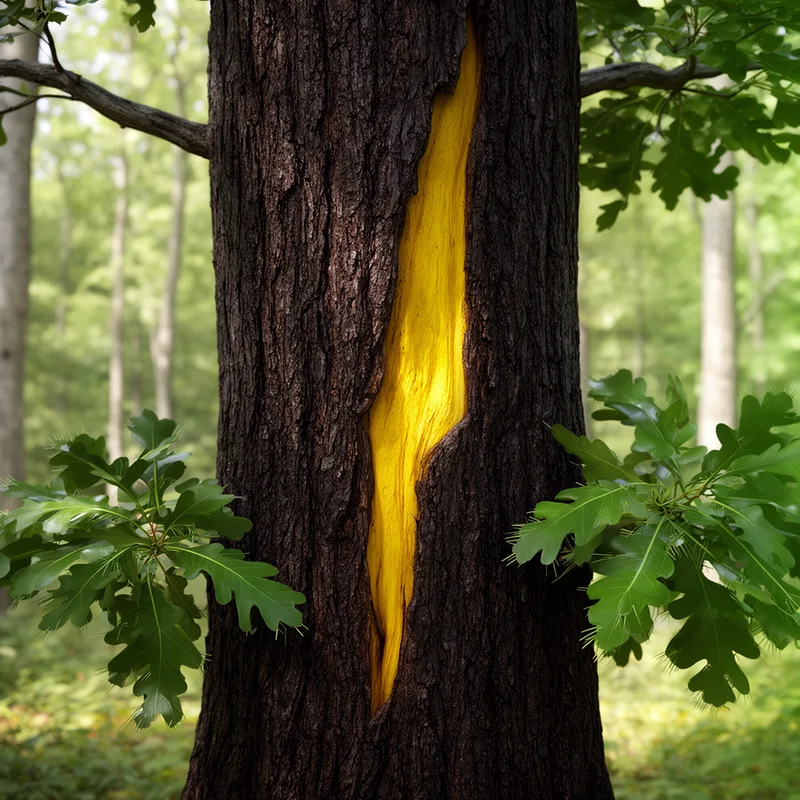
- Foresters often identify Quercus velutina by its distinctive dark outer bark and yellow inner bark.
Examples
-
The Quercus velutina is valued for its strong timber and tannin-rich bark.
-
Many hikers admire the distinctive dark bark of Quercus velutina in the Appalachian forests.
-
Foresters often identify Quercus velutina by its yellow inner bark and bristle-tipped leaves.
-
The Quercus velutina tree can grow up to 80 feet tall.
-
Many Quercus velutina trees are found in the Appalachian region.
-
Many hikers admire the tall stature and dark bark of Quercus velutina in the Appalachian forests.
-
In eastern North America, Quercus velutina is known for its valuable timber and vibrant fall foliage.
Synonyms


 1
4.1
1
4.1
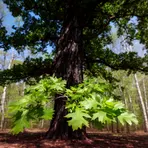
A large tree from eastern North America with dark bark and leaves that have five points
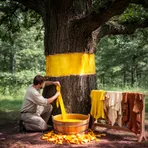
A large tree from eastern North America that has yellow inner bark used to make dye and tan leather

A medium to large tree from eastern America that loses its leaves and has yellow inner bark used for dyeing

A medium to large tree that loses its leaves, with yellow inner bark used to make leather
How Big

Surface Forms
Morphology
Quercus + velutina
This is a scientific Latin binomial: while 'Quercus' can be glossed as 'oak', the specific epithet 'velutina' is not a common English word and is not listed in the provided dictionary data. A B1 learner who knows the given constituents would not be able to derive the common name 'black oak' (and even a literal reading of 'velutina' as 'velvety' would not predict 'black'), so the meaning is not compositionally transparent.
Etymology
Quercus velutina is a scientific name from Latin: Quercus means 'oak' and velutina means 'velvety'. One popular idea is that 'velvety' points to the soft hairs on young leaves and twigs, so the name helps you remember it is the 'black oak' with dark bark.