

quadruple time
- noun
- /kwɑːˈdruːpəl taɪm/
- Specialized
 :
compás cuaternario
:
compás cuaternario
- The song is written in quadruple time.
- triple or quadruple time
Examples
-
The song is written in quadruple time, so we clap four times for each measure.
-
Can you play this piece in quadruple time?
-
Many modern pop songs are written in quadruple time for easy dancing.
-
The conductor emphasized the strong first beat of each bar in quadruple time.
-
The waltz is typically in triple time, while the march is in quadruple time.
-
When composing, she prefers using quadruple time to create a steady rhythmic flow.
-
In the concert, most of the pieces were performed in quadruple time, allowing everyone to dance along easily.
Synonyms


 1
3.8
1
3.8
A musical beat pattern with four beats in each bar
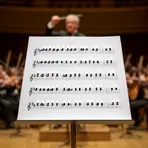 1
5.2
1
5.2
A beat pattern in music with four beats in each bar, often shown as C
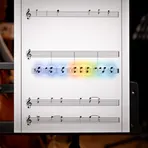
A time pattern in music with four beats in each bar
Surface Forms
Morphology
The meaning 'a musical rhythm with four beats per measure' is directly derivable from combining 'quadruple' (fourfold) with 'time' (metrical pattern), so a learner who knows both constituents can infer the MWE. This follows standard descriptive compounding in musical terminology and has clear cognates or analogous constructions cross-linguistically, making it immediately comprehensible to B1 learners.
Etymology
Quadruple time is a musical phrase that means a rhythm with four 'beats' in each bar. Here quadruple means four and time means the rhythm, so imagine marching or dancing while you count 1-2-3-4 and step on the strong first beat; that's why it describes music made in groups of four beats.