
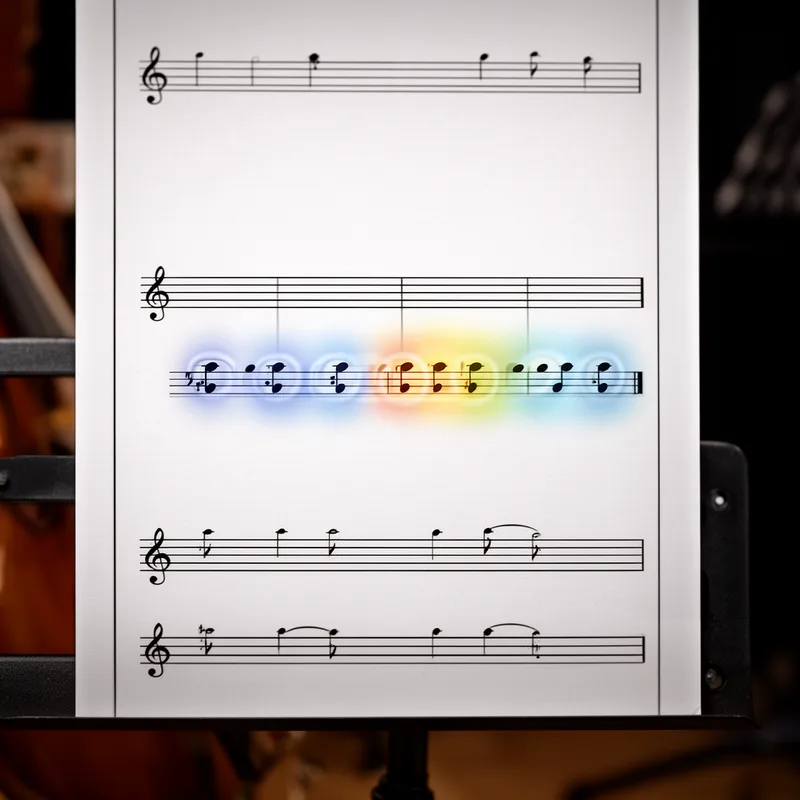
common measure
- noun
- /ˈkɑːmən ˈmɛʒər/
- Specialized
- The piece is written in common measure, which gives it a steady, marching rhythm.
Examples
-
Many folk songs are composed in common measure for its simplicity and regularity.
-
Beethoven often used common measure in his symphonies to convey clarity and balance.
-
The song is written in common measure.
-
Can you explain what common measure means?
-
Many folk songs are composed in common measure for its simplicity and regularity.
-
The piece is written in common measure, which gives it a steady, marching rhythm.
-
Beethoven often used common measure in his symphonies to convey clarity and balance.
Synonyms


 1
3.8
1
3.8
A musical beat pattern with four beats in each bar
 1
5.2
1
5.2
A beat pattern in music with four beats in each bar, often shown as C

A way of counting music in groups of four beats
How Complex

Surface Forms
Morphology
The meaning 'a musical time signature (4/4)' is a specialized, technical sense that cannot be directly inferred from 'common' ('usual/shared') plus the given sense of 'measure' ('benchmark or standard'). A B1 learner who only knows these constituent meanings would not predict the musical/bar meaning or the specific 4/4 interpretation without prior exposure to musical terminology, so the phrase is idiomatic/terminological in this use.
Etymology
Common measure comes from music where a steady four-beat pulse feels like marching: one, two, three, four. Because this beat was very common, musicians called it a 'common measure', meaning the usual musical time with four beats in each bar.