
quackgrass
- noun
- /ˈkwækˌɡræs/
- UK
- Many farmers struggle to control quackgrass in their fields.
Examples
-
Farmers consider quackgrass a major nuisance due to its aggressive growth and resilience.
-
Quackgrass often invades gardens and lawns, making it difficult to remove completely.
-
The field was overrun with quackgrass, outcompeting most other plants.
-
The garden was overrun with quackgrass.
-
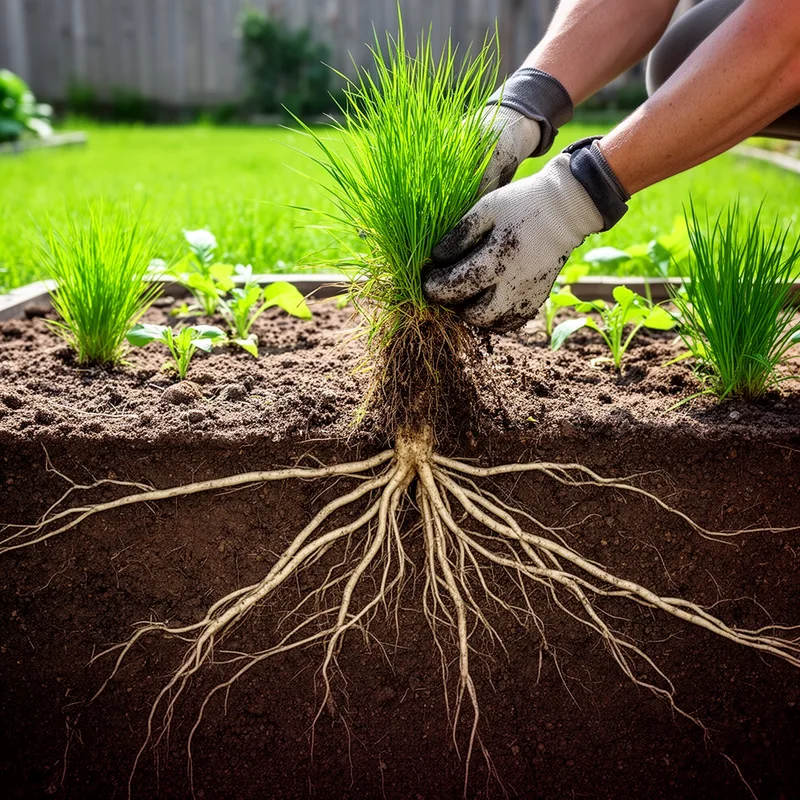
The quackgrass spreads rapidly through its creeping rhizomes, making it a troublesome weed in gardens.
-
Farmers often struggle to control quackgrass because it can quickly take over fields and choke out crops.
-
To get rid of quackgrass, gardeners need to remove it by the roots, as it can regrow from leftover rhizomes.
Synonyms

 1
7.5
1
7.5

A European grass with long underground roots that spreads quickly and becomes a common weed

A common weed with long stems under the ground that spreads quickly through lawns

A fast-spreading European grass with long underground stems that is a common weed in gardens and fields

A fast-spreading grass with creeping roots that grows as a weed

A grass from Europe that spreads quickly by stems under the ground and is a weed in North America
How Invasive


Surface Forms
Morphology
quackgrass = quack + grass (semi-transparent) = quack + grass
The second element 'grass' makes it clear the word names a type of grass, but the first element 'quack' in this plant name is etymologically obscure and does not convey the common meaning 'quack' (fraud), so the compound is only partially transparent to learners.
Etymology
Quackgrass may be a folk name; a helpful way to remember it is to think of the part quack like a 'quack' doctor — something 'fake' or unwanted — because this grass looks like normal grass but is actually a stubborn weed. It is also called couch grass, and because it spreads quickly by underground roots and keeps coming back, that explains why it is such a nuisance.