
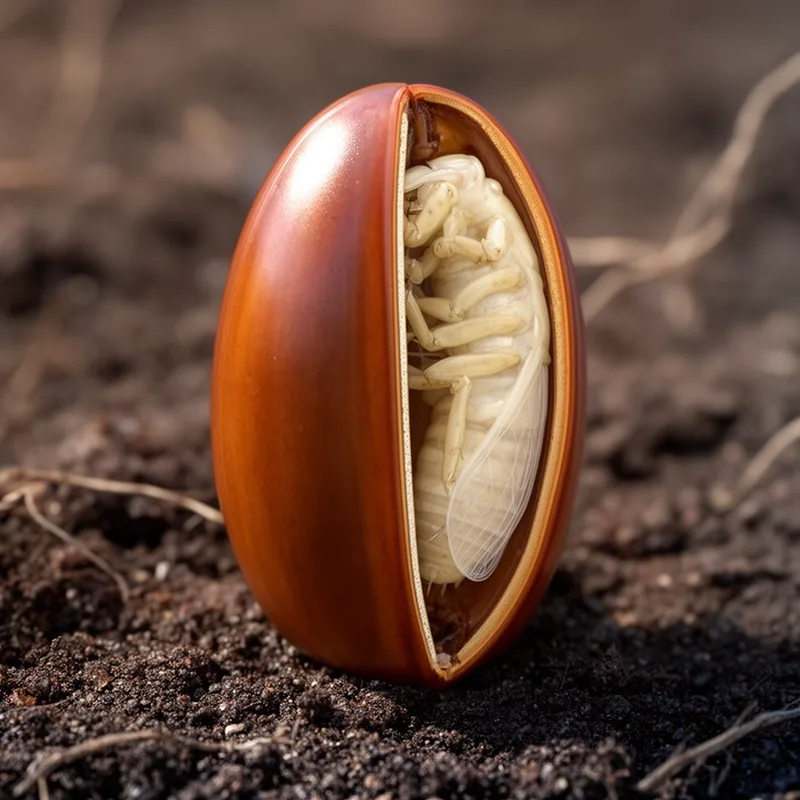
puparium
 1
9.9
1
9.9

- noun
- /ˌpjuːˈpɛəriəm/
- Specialized
- The skin becomes a home, or puparium, until the next spring, when the insect makes its amusing debut as a fly.
Examples
-
"A fly that has just climbed out of its puparium looks as if it has a tiny balloon on its head.
Academic text (1994) -
The fly fills it with blood, forcing the puparium to crack open so the fly can escape.
Academic text (1994) -
The fly fills its body with blood until the puparium cracks open, allowing it to escape.
-
The life cycle of the insect moves from egg to larva, and finally to the protective puparium.
-
After forming a puparium, the insect remains safe as it develops into its adult form.
Synonyms
 50
3.0
50
3.0
A soft silk cover that an insect makes to protect itself before becoming an adult
 12
8.1
12
8.1
A hard case in which a caterpillar turns into a butterfly or moth
How Protective

Surface Forms
Morphology
Etymology
The word puparium comes from pupa, an old word meaning 'doll' or 'puppet', with the ending -arium meaning 'place'. So you can think of a puparium as a hard 'doll house' or shell that protects an insect while it changes into an adult.