
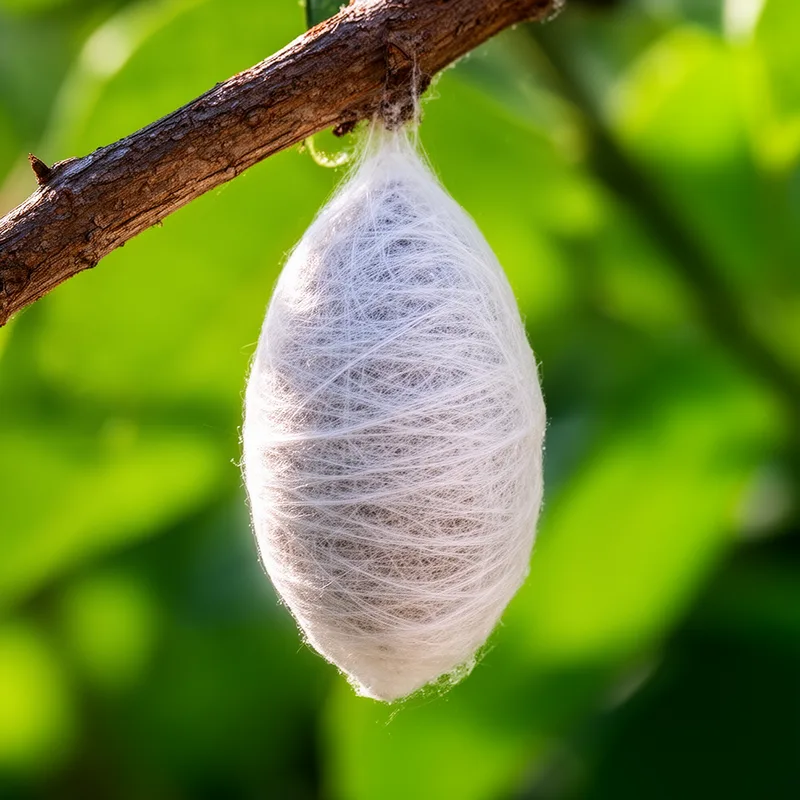
cocoon
 50
3.0
50
3.0

- noun
- /kəˈkun/
- In a box, we raise silkworms and give their colorful cocoons to other children in exchange for snacks.
- emerge from a cocoon
- leave the cocoon
- a spider cocoon
Loading YouTube…
Watch on YouTubeHe took a pair of scissors, a knife, and he cut open the cocoon to let the butterfly out 'cause he saw it struggling.
- He took a pair of scissors, a knife, and he cut open the cocoon to let the butterfly out 'cause he saw it struggling.
- Over the course of about two weeks, they will make their cocoons and then like stay in their cocoons and then literally hatch out into butterflies.
Examples
-
I feel like a butterfly drawn from a cocoon, the woman said.
-
We found a gigantic cocoon right where you're standing.
-
It's broken out of its cocoon.
-
In my black cocoon, I'm where no one can find me.
-
The next morning, we walked across our frozen neighborhood, still in its cocoon of holiday quiet, to the hospital.
Academic text (2007) -
This is a cocoon, and inside he's going through changes.
-
Over the course of about two weeks, they will make their cocoons and then like stay in their cocoons and then literally hatch out into butterflies.
-
The caterpillar spun a protective cocoon around itself before transforming into a butterfly.
-
After a few days, the spider's cocoon hatched, revealing dozens of tiny spiderlings.
-
Nature conservancy groups often study cocoons to learn about insect life cycles and habitats.
Synonyms
 1
9.9
1
9.9
A hard outer shell that some insect larvae make to protect the developing insect inside
How Protective

Surface Forms
Etymology
Cocoon comes from the French word cocon, which means 'silk case' and probably from a Greek word for a 'small seed' because the wrapped silk looks like a little seed. So a cocoon is the silky case an insect spins to protect itself.