

pulse-time modulation
- noun
- /pʌls taɪm ˌmɒdʒʊˈleɪʃən/
- Specialized
- Engineers use pulse-time modulation to improve signal transmission in noisy environments.
Examples
-
Understanding pulse-time modulation is essential for designing modern telecommunication systems.
-
The quality of digital communication relies on precise pulse-time modulation techniques.
-
The concept of pulse-time modulation is fascinating!
-
Can you explain pulse-time modulation?
-
Engineers use pulse-time modulation to encode information effectively in telecommunication systems.
-
In digital communication, pulse-time modulation varies the time between pulses to represent data accurately.
-
The efficiency of data transmission can be greatly enhanced by employing pulse-time modulation methods.
Synonyms
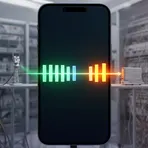
A way of changing a series of pulses, for example their length or strength, to send information
Surface Forms
Morphology
pulse-time + modulation
The term decomposes straightforwardly into pulse + time + modulation — i.e. modulation (changing) of the timing of pulses — so a learner who knows 'pulse', 'time' and 'modulation' can infer that it means varying the time intervals between pulses. Although technical, the compound follows normal English composition and the logic (modulating timing) is cross-linguistically transparent, making the meaning predictable from the parts.
Etymology
Pulse-time modulation paints a simple picture: tiny bursts called pulses are sent, and the sender changes how far apart they are in time, and this modulation of the gaps carries the information. So, it means 'a way of sending information by changing the time between pulses'.

