
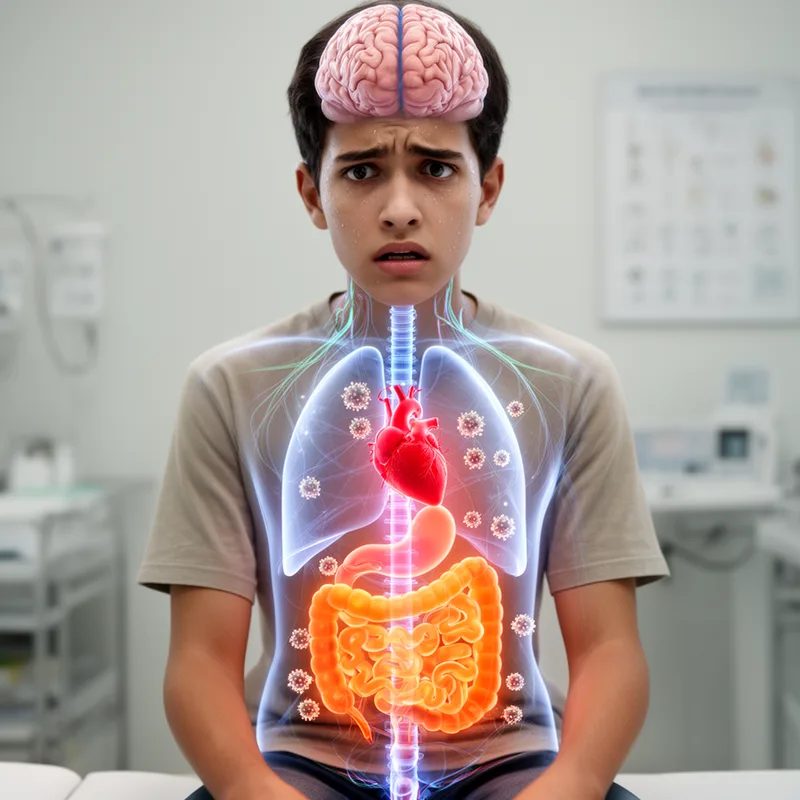
psychobiological


 1
8.4
- adjective
- /ˌsaɪkoʊˌbaɪəˈlɒdʒɪkəl/
- Specialized
- Importantly, this symbolic capacity (or better, symbolic necessity) does not imply that the actual manifestations of cultural symbolism will be determined by psychobiological or neurological universals.
Examples
-
Commitment, the cognitive side of motivation, must increase before dependence, the psychobiological motivation, can develop.
Academic text (1994) -
Where dependence is seen as a psychobiological phenomenon responsible for withdrawal, commitment is seen as a cognitive-intellectual phenomenon.
Academic text (1994) -
The psychobiological aspects of the ritual only add to its power.
Academic text (2007) -
Today... I would like to discuss some of the lesser- known aspects of psychobiological therapy.
-
Support for this assumption comes from Berlyne's psychobiological approach to aesthetics.
Academic text (2001) -
The politics of canon generally covered the appropriation of the female body, both the written corpus and the psychobiological entity, by the male Romantic.
Academic text (2000) -
The study of psychobiological effects reveals how our brain reacts to stress and its impact on health.
-
Researchers are exploring psychobiological connections that influence both mood and physical wellness.
-
Understanding psychobiological interactions can help develop better treatments for mental health disorders.
Synonyms
 1
9.3
About how the mind and body affect each other
 1
8.0
Relating to how the body and mind work together to affect behavior
How Biological

Surface Forms
Morphology
psychobiological = psychobiology (transparent) = psychobiology + ical
Derived from the noun 'psychobiology' plus the adjectival suffix '-ical', meaning 'relating to psychobiology'.
Etymology
Psychobiological combines psycho- 'mind', bio- 'life', and -logical 'study', like in psychology and biology. So, it means the study of how the 'mind' and the 'body' work together.