
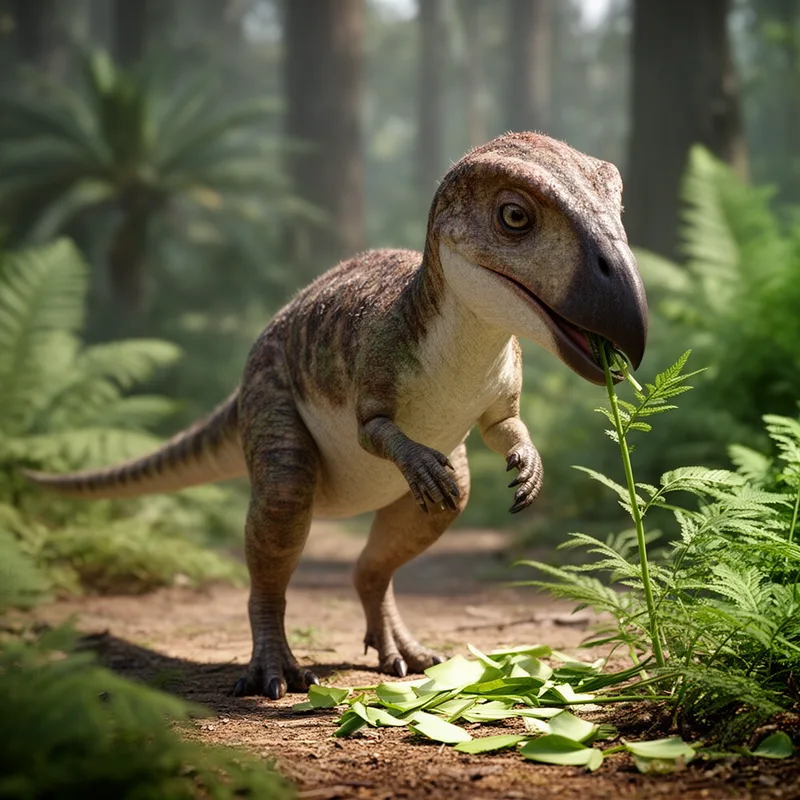
psittacosaur
- noun
- /ˌsɪtəˈkɔːsɔːr/
- Specialized
- The museum displays a nearly complete psittacosaur skeleton from the Early Cretaceous period.
Examples
-
Recent discoveries revealed the possible coloration of a juvenile psittacosaur.
-
A psittacosaur would have used its beak to clip plants close to the ground.
-
The psittacosaur is often considered one of the earliest dinosaurs.
-
Many fossils of the psittacosauruses have been found in Mongolia.
-
A psittacosaur used its parrot-like beak to eat low-growing plants in its habitat.
-
In the museum, visitors can see a fossilized psittacosaur that dates back millions of years.
-
Researchers believe the psittacosaur was a bipedal dinosaur that roamed during the Early Cretaceous.
Synonyms
A small early dinosaur with a parrot-like beak, a tiny neck frill, and two strong back legs
Surface Forms
Morphology
psittacosaur = Psittacosaurus (opaque) = psittaco + saur
Formed from classical combining elements (psittaco- + -saur/-saurus) that are unfamiliar and non-productive for most learners, so the meaning is not derivable from common English vocabulary.
Etymology
Psittacosaur comes from Greek parts psittaco- meaning 'parrot' and -saur meaning 'lizard', so it literally means 'parrot lizard'. That's why the name fits: these small dinosaurs had a parrot-like beak and walked on two legs.

