
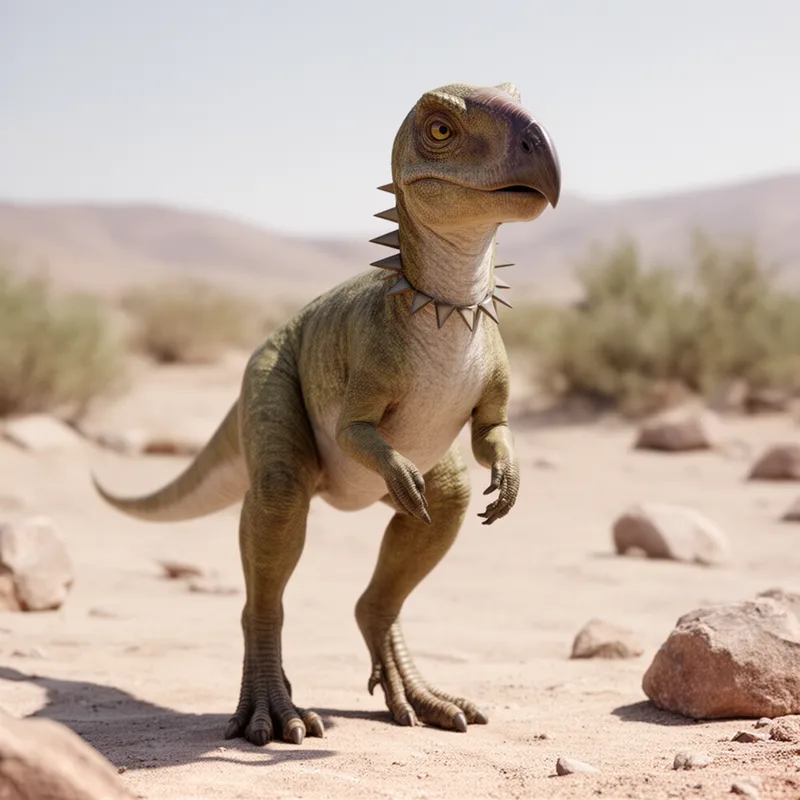
psittacosaurus
- noun
- /ˌsɪtəkəˈsɔrəs/
- Specialized
- With its parrot-shaped beak, the psittacosaurus stands out among early ceratopsians.
Examples
-
The fossil of a psittacosaurus was discovered in Mongolia's Gobi Desert by paleontologists.
-
Museum exhibits often display the psittacosaurus because of its unique frill and bipedal posture.
-
The psittacosaurus roamed the Earth millions of years ago.
-
Did you know that the psittacosaurus had a beak-like jaw?
-
The fossil of a psittacosaurus was discovered in Mongolia's Gobi Desert by paleontologists.
-
Museum exhibits often display the psittacosaurus because of its unique frill and bipedal posture.
-
With its parrot-shaped beak, the psittacosaurus stands out among early ceratopsians.
Synonyms
A small early plant-eating dinosaur with a parrot-like beak that walked on two legs
Surface Forms
Morphology
psittacosaurus = psittaco + saurus
Although the name is etymologically built from classical combining forms meaning 'parrot' + 'lizard', those forms are not productive or familiar to average learners, so the meaning cannot be reliably derived from common English bases.
Etymology
Psittacosaurus comes from Greek words psittakos 'parrot' and sauros 'lizard'. It was named for its parrot-like beak and long back legs, so thinking 'parrot lizard' helps you remember this small dinosaur.

