
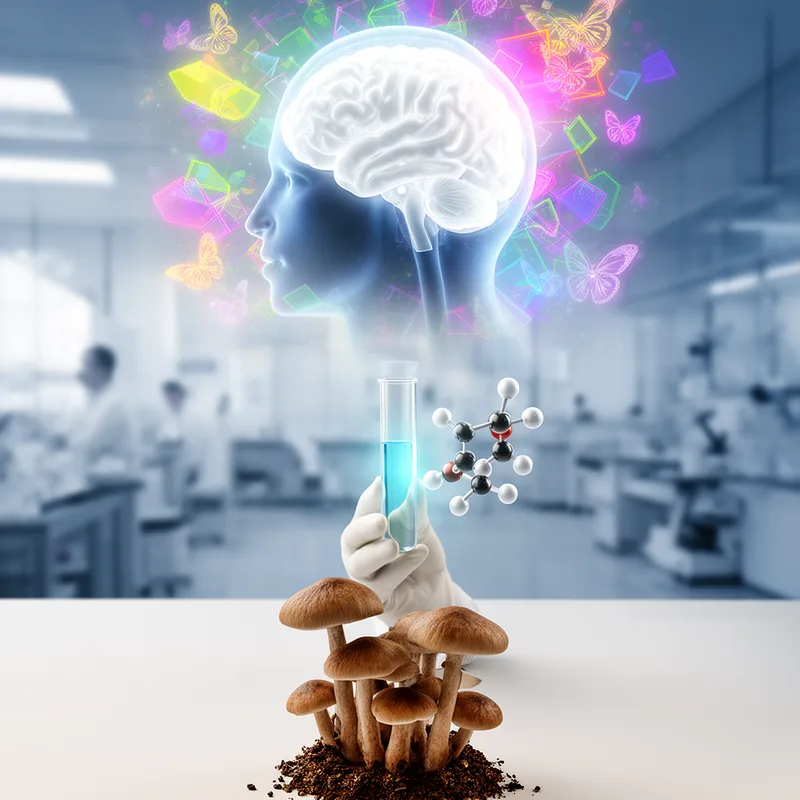
psilocine
- noun
- /ˈsɪləˌsiːn/
- NSFW
- Most psychedelic mushrooms contain both psilocine and psilocybin, which cause their hallucinogenic effects.
Examples
-
The psilocine in these mushrooms can cause hallucinations.
-
Scientists studied the effects of psilocine on brain function in volunteers.
-
The legal status of psilocine varies from country to country.
-
Many researchers study psilocine for its therapeutic potential.
-
Many researchers study psilocine for its therapeutic potential in treating mental health disorders.
-
The psilocine discovered in certain mushrooms has drawn attention for its psychedelic properties.
-
In clinical trials, participants reported vivid dreams after consuming psilocine-containing mushrooms.
Synonyms

A chemical in some mushrooms that makes people see or feel things that are not real
Surface Forms
Etymology
Psilocine gets its name from the mushroom genus Psilocybe, which comes from the Greek root psilos meaning 'bare' and a word for 'head', a picture of the mushroom's smooth cap; so the name points to the kind of mushroom it comes from. Since psilocine is the natural psychedelic chemical found in these mushrooms, the name links the drug to the 'bare-headed' mushroom where it is found.

