
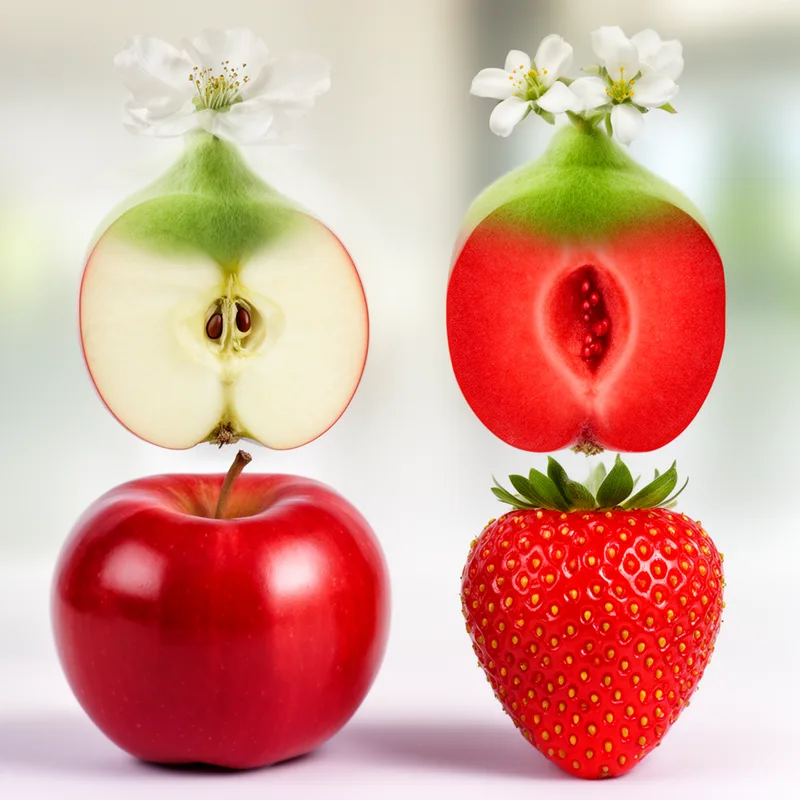
pseudocarp
- noun
- /ˈsuːdəˌkɑrp/
- Specialized
- A strawberry is a classic example of a pseudocarp due to its unique botanical structure.
Examples
-
The apple is considered a pseudocarp because much of its flesh develops from tissues outside the ovary.
-
Botanists often contrast pseudocarps with 'true fruits,' which form solely from the ovary.
-
A pseudocarp can be found in many fruits.
-
Did you know that a strawberry is a pseudocarp?
-
A strawberry is a classic example of a pseudocarp due to its unique botanical structure.
-
The apple is considered a pseudocarp because much of its flesh develops from tissues outside the ovary.
-
Botanists often contrast pseudocarps with 'true fruits,' which form solely from the ovary.
Synonyms
A fruit whose flesh comes from flower parts, like an apple or strawberry
A fruit like an apple or pear whose edible part comes from other flower parts
Surface Forms
Morphology
pseudocarp = carp (opaque) = pseudo + carp
Although the prefix pseudo- is transparent as 'false,' the second element is a bound botanical combining form, so the meaning is not easily recoverable for an average learner.
Etymology
The word pseudocarp comes from the Greek parts pseudo- meaning 'false' and karpos meaning 'fruit'. You know pseudo- from pseudonym, which means 'false name'. So a pseudocarp is a 'false fruit' — it looks like a fruit but much of its flesh comes from other flower parts, not the ovary, the part that makes seeds.

