

false fruit
- noun
- /fɔls frʌt/
- Specialized
- The apple is a classic example of a false fruit because its edible part is derived mainly from the receptacle.
Examples
-
Pears and quinces are also considered false fruits in botanical terms.
-
Unlike a berry, a false fruit includes tissues that are not part of the ovary.
-
An apple is a type of false fruit.
-
Did you know that a pear is also a false fruit?
-
The apple is a classic example of a false fruit because its edible part is derived mainly from the receptacle.
-
Pears and quinces are also considered false fruits in botanical terms.
-
Unlike a berry, a false fruit includes tissues that are not part of the ovary.
Synonyms

A fruit like an apple or strawberry that forms mostly from parts of the flower outside the ovary
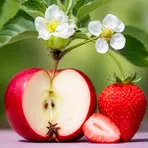
A fruit whose flesh comes from flower parts, like an apple or strawberry
Surface Forms
Morphology
The phrase follows the familiar pattern 'false + noun' where 'false' signals 'not a true X', so a B1 learner who knows the words could plausibly infer it means 'not a true fruit'. However, the intended meaning is a technical botanical sense (an accessory fruit formed from non-ovary tissues) that is specialized and easily mistaken for 'fake' or 'artificial' fruit, so the exact sense is not fully predictable without domain knowledge.
Etymology
False fruit is a plant name for a fruit where the tasty, fleshy part grows from other parts of the flower, not the 'ovary'. So apples and pears are called false fruits because you eat the flower's surrounding tissue rather than the 'ovary' itself.

