
proteinase


 1
7.2
1
7.2
- noun
- /ˈproʊtiˌneɪs/
- Specialized
- During the experiment, they used proteinase K to facilitate the lysis of the cells.
- proteinase inhibitors
- proteinase-activated receptors
Examples
-
Inhibition of the virally produced protease known as "HIV proteinase" provides another therapeutic category in which a drug has been approved for the treatment of HIV infection.
Academic text (2000) -
A1-PI and A2-M are the two important proteinase inhibitors present in plasma.
Academic text (2007) -
The samples were then treated with a proteinase K buffer for lysis.
Academic text (2014) -
A major component released from human neutrophil granules during the process of phagocytosis is a proteinase referred to as human neutrophil elastase.
Academic text (2007) -
Apart from the main drug groups, consisting of nucleoside analogues, proteinase inhibitors, and reverse-transcriptase inhibitors, many new compounds are under development.
Academic text (2000) -
A 1-PI is the chief proteinase inhibitor present in the highest amount inhibiting the serine proteinases elastase and trypsin.
Academic text (2007) -
a1-PI is an important plasma proteinase inhibitor (52 kDa) and is synthesized by hepatocytes and macrophages.
Academic text (2007) -
Immunoprecipitates were then incubated with proteinase K (Roche), followed by alcohol extraction, precipitation, and suspension in 30 ml TE buffer.
Academic text (2017) -
The slides were treated with proteinase K (50-200 mg/mL, Invitrogen, Carlsbad, CA, USA), washed, and dehydrated with ethanol.
Academic text (2003) -
The scientist added proteinase to the samples to break down the proteins into smaller peptides.
Synonyms
 7
7.7
7
7.7
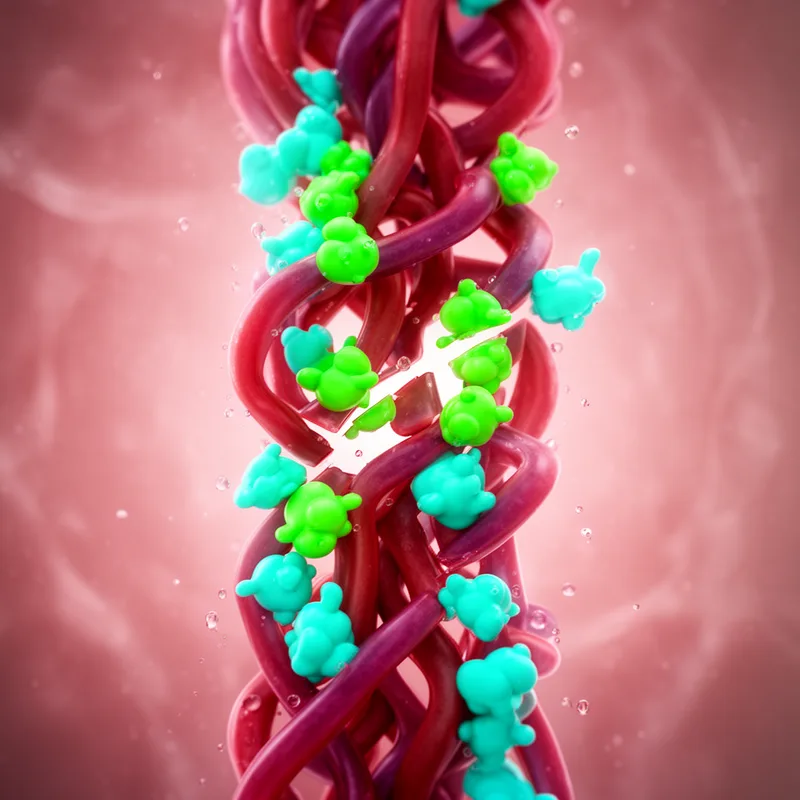
An enzyme that breaks proteins into smaller pieces
 1
4.4
1
4.4
A substance that breaks proteins into smaller parts living things can use
 1
8.8
1
8.8
An enzyme that cuts proteins and helps form clumps in the brain linked to Alzheimer's

An enzyme that breaks proteins into smaller pieces called peptides and amino acids

A substance that helps break down proteins by removing amino acids from their start
An enzyme that removes amino acids from the end of a protein chain
Surface Forms
Morphology
Etymology
Proteinase comes from protein, the important molecules in food and the body, and the ending -ase, which we add to name enzymes like lactase and lipase. So, a proteinase is an enzyme that 'breaks down' proteins into smaller pieces.