
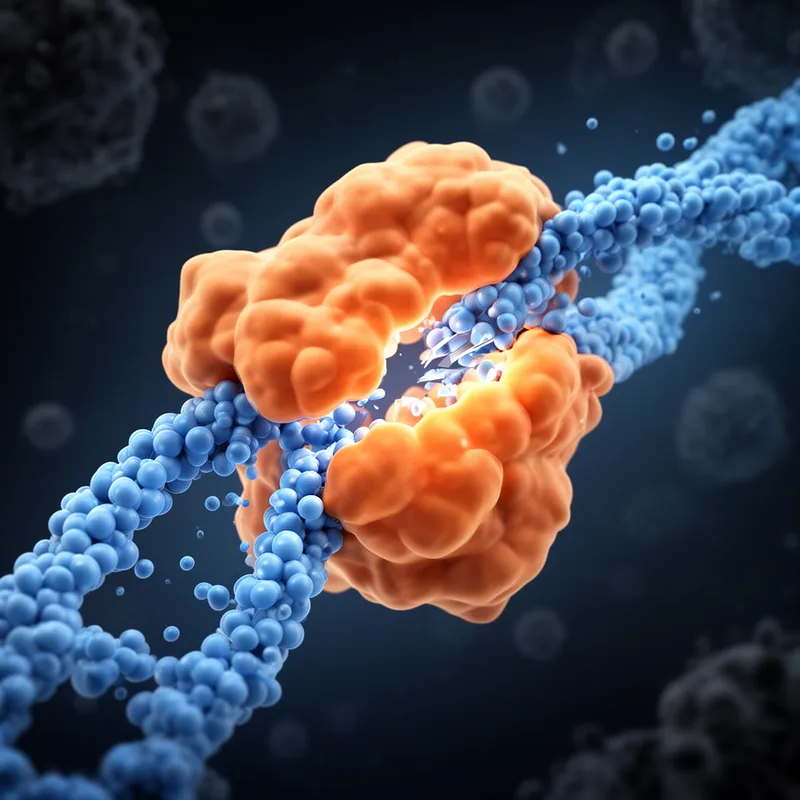
protease
 7
7.7
7
7.7

- noun
- /ˈproʊtiˌeɪs/
- Specialized
- By the mid-1990s, combinations of antiretroviral therapy, including protease inhibitors, were shown to significantly delay the onset of AIDS.
- protease inhibitor
- protease activity
- protease enzyme
Loading YouTube…
Watch on YouTubePaxlovid binds to an enzyme called protease to stop the virus from replicating itself.
- Paxlovid binds to an enzyme called protease to stop the virus from replicating itself.
Examples
-
The beans contain proteins, such as trypsin inhibitor, which suppress the action of proteases in the human digestive system.
Academic text (2001) -
Proteins in the cell are broken down by a specific kind of protease that activates during metabolism.
-
Development of resistance has been seen with these agents, including cross-resistance to other protease inhibitors.
Academic text (2000) -
The balance of proteases and antiproteases is essential for normal lung function.
Academic text (2007) -
The integrity of the gel is severely impaired by the activity of protease enzymes during the heating step.
Academic text (1993) -
Paxlovid binds to an enzyme called protease to stop the virus from replicating itself.
-
Inhibition of PR3, using serine protease inhibitors, is therefore an attractive potential target.
Blog text (17) -
They secrete proteases that remodel the tissue that would also help with regeneration and repair.
-
Various investigators have studied the protease-antiprotease balance in the development of different respiratory conditions like COPD, emphysema, bronchiectasis, and bronchial asthma.
Academic text (2007) -
The research team studied how the protease breaks down food proteins in the digestive system.
Synonyms


 1
4.4
1
4.4
A substance that breaks proteins into smaller parts living things can use
 1
7.2
1
7.2
A substance in living things that breaks proteins into smaller parts

An enzyme that breaks proteins into smaller pieces called peptides and amino acids
Compounds
- Specialized
5
5.3
A medicine that stops enzymes from breaking proteins and treats HIV
Surface Forms
Morphology
protease = protein (semi-transparent) = prote + ase
Formed from the combining form 'prote-' (protein) plus the technical enzyme suffix '-ase'; the connection to 'protein' is clear but '-ase' is specialized and may be unknown to average learners.
Etymology
Protease comes from the common word protein and the ending -ase, which shows that the word is an enzyme, and protein comes from the Greek root protos, meaning 'first'. So, a protease is an enzyme that breaks down protein into smaller parts.