
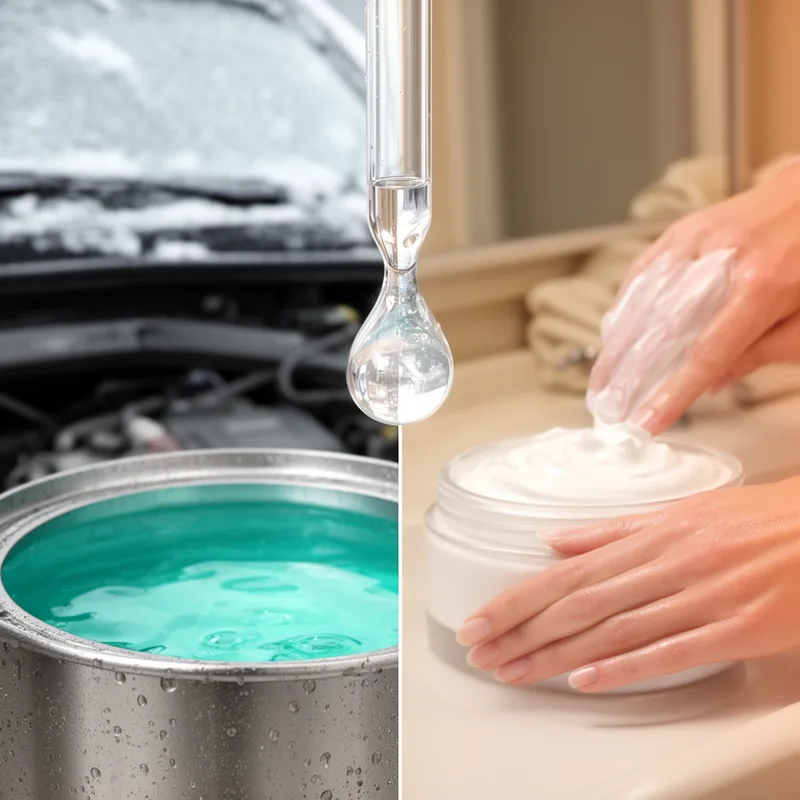
propylene glycol


 1
7.2
1
7.2
- noun
- /ˈprɒpəˌliːn ˈɡlaɪkɒl/
- Specialized
- Propylene glycol is commonly used in antifreeze because it has a low freezing point.
Examples
-
Drugs used topically in the ear are generally formulated into solutions or suspensions in a vehicle of anhydrous glycerin or propylene glycol.
Academic text (2004) -
Some suppliers develop their e-liquid with vegetable glycerin after some users experienced allergic reactions to propylene glycol.
Blog text (25) -
They include some antibiotics as well as vehicles such as propylene glycol.
Academic text (2004) -
There are diverse solutions, such as propylene glycol and vegetable glycerin.
Blog text (25) -
Body products suffer from named cancer-causing agents, something like DEA or possibly green teas, and different agents, for instance, like propylene glycol.
Blog text (25) -
You have had an allergic reaction to propylene glycol, a desensitized active component contained in a number of products applied to the skin, including Zovirax Absence of Warmth Abscess Cream.
Blog text (23) -
Many cosmetic products contain propylene glycol as a moisturizing agent for the skin.
-
Due to its viscosity, propylene glycol is often used as a solvent in various pharmaceutical formulations.
Synonyms
A sweet, clear, thick liquid that people add to antifreeze, brake fluid, and skin lotions
Surface Forms
Morphology
The term is a straightforward compound: combining 'propylene' (a hydrocarbon) with 'glycol' (a dihydric alcohol) yields a glycol derived from propylene, so its referent as a specific viscous alcohol is compositionally predictable. This follows standard chemical-naming logic that is cross-linguistically common, so a B1 learner who knows both constituents can reasonably infer the general meaning and likely uses (e.g., in antifreeze or cosmetics).
Etymology
Propylene glycol gets its name from two parts: propyl and glycol. The first part points to a small three-carbon piece and the second means a 'sweet, alcohol-like' liquid, so the name is just a simple description of the kind of liquid now used in creams, antifreeze, and other products.