
proprietary drug
- noun
- /prəˈpraɪəˌtɛri drʌg/
- Specialized
- The pharmaceutical company developed a new proprietary drug that is effective against malaria.
Examples
-
Once the patent expires, other manufacturers can produce generic versions of a proprietary drug.
-
The new proprietary drug has shown great promise in clinical trials.
-
Doctors may prescribe either a proprietary drug or a generic equivalent depending on availability and cost.
-
Many proprietary drugs are significantly more expensive than generic versions.
-
The pharmaceutical company introduced a new proprietary drug that promises to improve pain management.
-
Due to its proprietary drug status, only the original manufacturer is allowed to produce this medication.
-
Doctors often prescribe proprietary drugs because they are backed by extensive clinical research and brand reputation.
Synonyms

 3
4.2
3
4.2

A medicine sold under a company's name that only that company sells
Antonyms
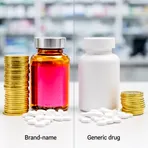
- Specialized
9
3.7
A medicine that has the same dose and effect as a brand-name medicine but costs less
How Protected
- Specialized

- Specialized
9
3.7
Surface Forms
Morphology
This is a straightforward adjective + noun composition: 'proprietary' (owned/brand-protected) modifies 'drug', so the meaning 'a drug owned, marketed, or sold exclusively by a company' is directly predictable from the parts. The legal nuance about patents/trademarks is specialized but does not block comprehension for a learner who knows both constituent words.
Etymology
Proprietary drug comes from proprietary, meaning 'owned', and drug as a medicine. It refers to a medicine sold under one company's brand and protected by a patent. A patent is a legal right that stops other companies copying it, so the phrase means a medicine 'sold only by one company'.