
prismatoid
- noun
- /ˈprɪzməˌtɔɪd/
- Specialized
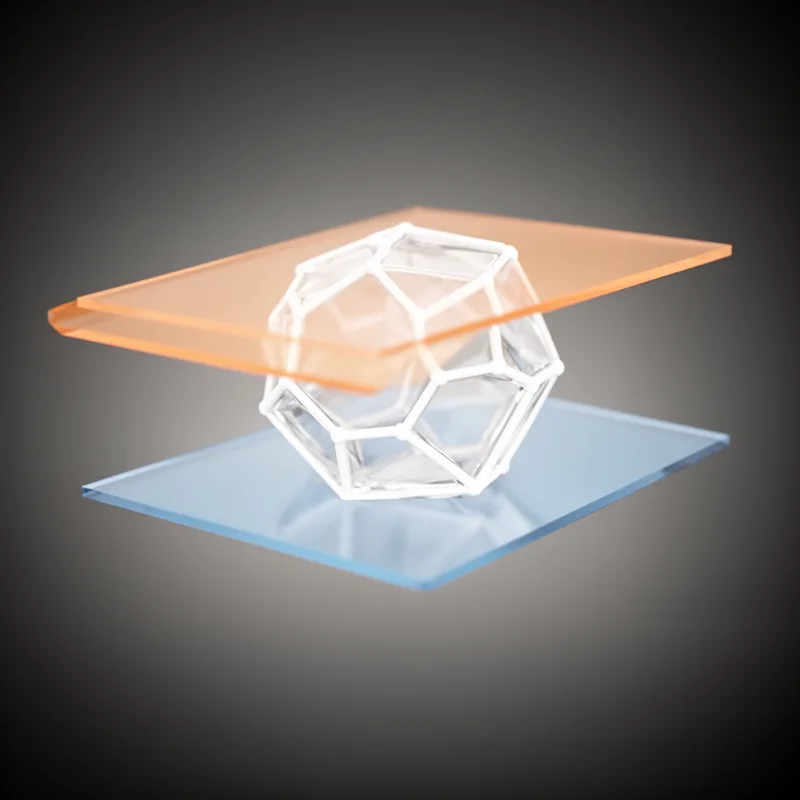
- In geometry, a prismatoid is a solid with vertices that all lie in two parallel planes.
Loading YouTube…
Watch on YouTubeWe know the volcano unfolding works for prismatoids.
- We know the volcano unfolding works for prismatoids.
Examples
-
The volume of a prismatoid can be calculated using a specific mathematical formula.
-
The architect used the concept of a prismatoid to design a unique roof structure.
-
Any polyhedron with its vertices lying in two parallel planes is considered a prismatoid.
-
The prismatoid has two parallel bases.
-
I learned about a prismatoid in my geometry class.
-
A prismatoid consists of two parallel bases connected by trapezoidal faces.
-
To understand the properties of a prismatoid, one must study its geometric characteristics.
Surface Forms
Morphology
Etymology
The word prismatoid comes from prism and the ending -oid, which means 'like' or 'resembling', as in asteroid and humanoid. So a prismatoid is a solid 'like' a prism: its vertices lie in two parallel planes and the faces in those planes act as its bases.

