
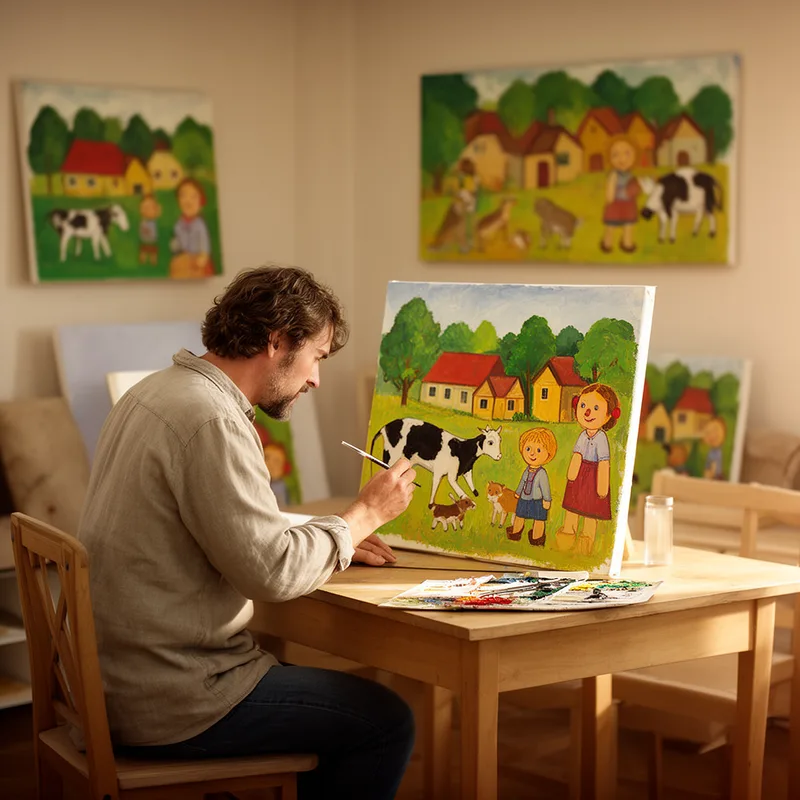
primitive art


 1
6.7
1
6.7
- noun
- /ˈprɪmɪtɪv ɑrt/
- Specialized
- She feels a deep connection to primitive art, appreciating its raw, unfiltered expression of human experience.
- so-called primitive art
- called primitive art
Examples
-
In the late 1950s and early 1960s, a spate of exhibitions of "primitive" art drew attention: major temporary installations opened in many large U.S. cities, including Chicago (1961), Los Angeles (1962), and Kansas City (1962), to name just a few.
Academic text (2003) -
Many museums showcase primitive art that reflects the cultural heritage of untrained artists.
-
As Olsson well knew, so-called primitive art had a profound impact on modernism across Europe.
Academic text (1999) -
Despite such sentiments, interest in African and other so-called primitive art was growing among the Western Modernist avant-garde.
Academic text (1999) -
The newspaper's editorials praised Coe for drawing attention to an area of art not previously addressed at the museum and for bringing a general understanding of "primitive" art to Kansas City.
Academic text (2000) -
Robert K. Sanford wrote in The Kansas City Star (1962:1F): "Nowhere in the United States in recent years has a primitive art show of such dimensions been presented, and very few previous shows have matched it."
Academic text (2000) -
During the exhibition, I was fascinated by the vibrant colors and simple forms in the primitive art on display.
Synonyms
 2
7.2
2
7.2
Creative work made by self-taught people outside the normal art world

Work that people make without formal art training like paintings or sculptures

Art made by people without formal training that looks simple and childlike, often with bright colors
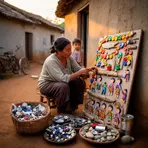
Art made by people without formal training that shows local traditions and everyday life
How Primitive

Surface Forms
Morphology
The noun phrase is compositionally transparent: 'primitive' (simple, unschooled/naïve) modifies 'art' (artistic creations), so the combined meaning — art made in a simple or naïve style, often by untrained makers — is directly inferable from the parts. This adjective + noun pattern is cross-linguistically common and would be understandable to a B1 learner who knows both constituent words.
Etymology
The term primitive art comes from old collectors who thought work by people who learned art on their own looked like very early or 'basic' art, so they used the word primitive to mean 'early' or simple. So today primitive art means art made without formal training, with a simple, direct style.