

preta


 1
9.9
- noun
- Literature
- According to legend, a preta roams the earth, seeking food and water but never satisfied.
- terra preta
Examples
-
Crows were perched on the spirit houses as if they were preta searching for their departed victims.
Academic text (2012) -
The woman's lips curled back; the preta screeched through her mouth: "You people get away!"
Academic text (2012) -
But if the preta are very strong, then people must stay several days, several weeks, making small contributions.
Academic text (2012) -
"No, they are markers for preta who were left behind.
Academic text (2012) -
According to Praful, she was "possessed by a preta," or evil spirit, as a result of a curse put on her by malicious neighbors.
Academic text (2012) -
"Mahakal Bhairav had helped her," he explained; "her preta had driven her mad but had been punished so harshly that it fled."
Academic text (2012) -
"I shouted at Praful. Her preta is speaking—not her!" he said.
Academic text (2012) -
Men and women squatted close around her, stroking her and speaking urgently to the preta—"Get out! Leave her!"
Academic text (2012) -
In many cultures, a preta is seen as a spirit that suffers from endless hunger and thirst.
-
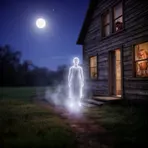
She claimed that the house was haunted by a preta, a spirit that could not find peace.
Synonyms
 1
9.5
A spirit without a body that appears to people or stays near places
 1
9.9
A frightening ghost that appears at night
 1
9.9
A ghost that people say visits a place, often at night

A ghost in South Asian stories that people believe haunts places or people
Surface Forms
Etymology
The word preta comes from Sanskrit preta, which meant 'departed' or 'dead person'. In Hindu and Buddhist stories a preta is a spirit turned into a 'hungry ghost', so the origin explains why the word means a wandering spirit with never-ending hunger.