
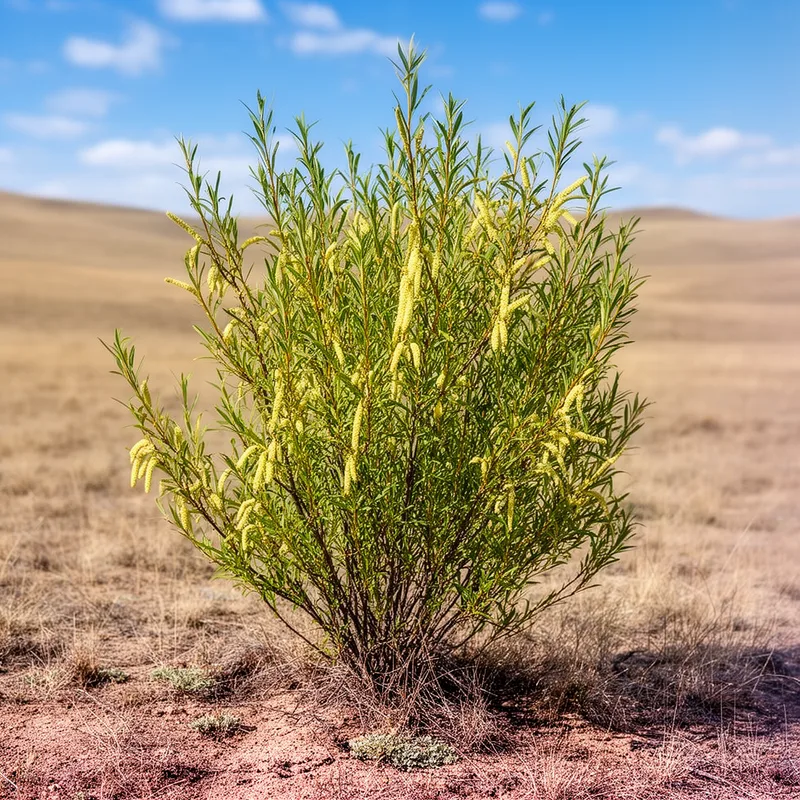
prairie willow
- noun
- /ˈprɛəri ˈwɪloʊ/
- Specialized
- The prairie willow is well adapted to dry, sandy soils in the Midwest.
Examples
-
In spring, the prairie willow produces slender catkins that attract many pollinators.
-
We planted several prairie willow bushes to help restore the native landscape.
-
The prairie willow thrives in dry conditions.
-
Many prairie willows grow along the riverbank.
-
In spring, the prairie willow produces slender catkins that attract many pollinators.
-
The prairie willow is well adapted to dry, sandy soils in the Midwest.
-
We planted several prairie willow bushes to help restore the native landscape.
Synonyms
A small bushy willow with thin branches that grows in dry parts of North America
Surface Forms
Morphology
The phrase is a straightforward noun–noun combination: a willow associated with or growing in prairie habitat. A B1 learner who knows 'prairie' (treeless grassland) and 'willow' (a type of tree/shrub) can reliably infer it denotes a type of willow found in prairies, so the meaning is directly compositional and cross-linguistically transparent.
Etymology
Prairie willow gets its name from where it grows and what it is: a small, thin willow that lives on the open prairie, a 'dry grassland'. That's why the name means a shrubby willow found in dry, sandy places.

