

postfix notation
- noun
- /ˈpoʊstˌfɪks noʊˈteɪʃən/
- Specialized
 :
notación posfija
:
notación posfija
- Many calculators use postfix notation because it eliminates the need for parentheses.
Examples
-
In postfix notation, the expression '3 4 +' means 3 plus 4.
-
Learning to convert between infix and postfix notation is important in computer science.
-
The calculator uses postfix notation for operations.
-
Do you understand postfix notation?
-
In postfix notation, the expression '3 4 +' means 3 plus 4.
-
Learning to convert between infix and postfix notation is important in computer science.
-
Many calculators use postfix notation because it eliminates the need for parentheses.
Synonyms

A way to write math with numbers before the sign so no parentheses

A way of writing math where operators come after numbers
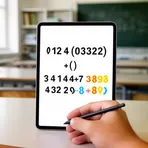
A way of writing math where operation signs come after numbers so parentheses are not needed
Surface Forms
Morphology
The noun phrase is compositionally built: 'postfix' specifies the ordering (operators after operands) and 'notation' denotes a system of writing, so their combination directly yields 'a notation in which operators follow operands.' Although technical, the meaning follows standard modifier + noun composition and is therefore predictable to a learner who knows both constituents.
Etymology
The term postfix notation comes from the simple idea of putting the operation after the numbers: postfix means 'placed after', so you write the numbers first and then the '+' or '*', for example '3 4 +'. That's why this way needs no 'parentheses' and is easy for calculators and programs to compute.

