

postfix
- noun
- /ˈpoʊstˌfɪks/
- Specialized
- Learning postfix can help you understand how some computer algorithms work.
Examples
-
Many calculators use postfix to simplify the order of operations.
-
In postfix notation, the expression '5 6 *' means 5 times 6.
-
A postfix is used in many programming languages.
-
The postfix operator follows the operand in an expression.
-
In mathematics, the expression '3 4 +' uses postfix notation to add the two numbers together.
-
When coding in certain programming languages, placing the operator after the operands results in postfix expressions.
-
Understanding postfix notation can simplify the evaluation of complex mathematical expressions.
Synonyms
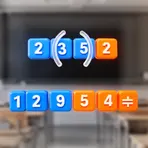
A way of writing math expressions without parentheses where each sign comes after the numbers

A way of writing math where operation signs come after numbers so parentheses are not needed

A way to write math with numbers before the sign so no parentheses
Compounds
- Specialized
A way of writing math expressions without parentheses where each sign comes after the numbers
Surface Forms
Morphology
Etymology
Postfix comes from the parts post- 'after' and fix 'attach', so in postfix notation the operator is written 'after' the numbers, for example '5 6 *' means 5 times 6.

