
positive charge
 2
3.9
2
3.9

- noun
- Specialized
- The positive charge is thought to be associated with bone formation, and the negative charge is thought to promote bone resorption.
- one positive charge
Loading YouTube…
Watch on YouTubeSodium is allowed to leak into the cell, thus carrying positive charge inside and making the inside go positive.
- Sodium is allowed to leak into the cell, thus carrying positive charge inside and making the inside go positive.
Examples
-
We call this AP type as it is positive charge carriers.
-
Because both carry positive charge, so they repel each other.
-
Pull up the positive charge on the oxygen.
-
But in principle, that amount of positive charge will be background constant.
-
Say I have a positive charge which is my nucleus.
-
Mine has a strong positive charge, although I'm not sure why.
Fiction book (1999) -
And you're still left with this positive charge on the special pair.
-
Sodium is allowed to leak into the cell, thus carrying positive charge inside and making the inside go positive.
-
Protons carry a positive charge that should act as an impenetrable wall of electric force to prevent them from coming together.
Academic text (2004) -
Sodium ions carry a positive charge and are essential for nerve function.
Antonyms

- Specialized
2
4.1
A state when an object has more electrons than protons and so attracts positive objects, for example a rubbed balloon
How Positive
- Specialized
2
3.9

- Specialized
Surface Forms
Morphology
The noun combines the adjective 'positive' (having a positive electrical quality) with 'charge' (an excess or deficiency of electrons), so the overall meaning — an electrical charge that is positive/higher potential — is directly derivable from the parts. This is a regular compositional compound found across languages in technical registers and follows standard semantic composition, making it accessible to a B1 learner who knows the constituent senses.
Etymology
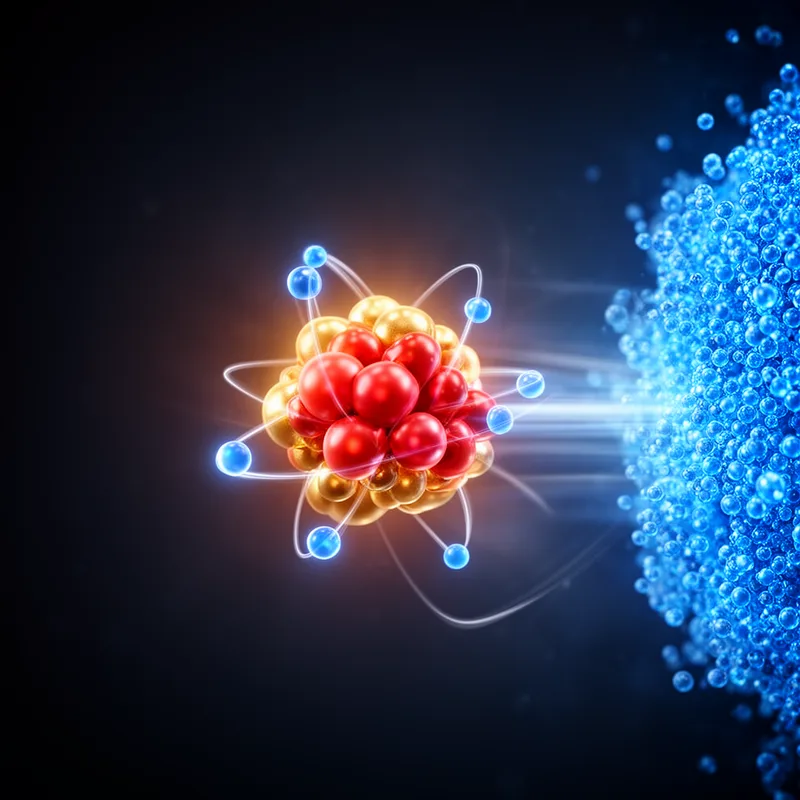
Positive charge comes from a simple picture: when an atom or object loses an electron, it is left with a 'plus' amount of electricity, so it has a positive charge. That's why positive charge means the object is missing electrons and is attracted to a 'negative' charge.