

to pore over
 28
5.5
28
5.5

- phrasal verb
- /pɔr ˈoʊvər/
- Kate is at the counter, her back to him, poring over some legal documents.
- poring over books
- pored over texts
Examples
-
Over the past six years, a small team of investigators pored over more than 6.3 million pages of CIA records to complete this report.
-
We were here with forensic accountants for weeks, poring over the register logs and receipts.
-
There are three other men at this table that have pored over every aspect--
-
Our best analysts poring over data for years looking for the guy, and they could never quite find him.
-
At night, the rest of the family pores over old family photo albums.
Fiction book (1997) -
He'd spend hours poring over the things that she had found.
-
I remember spending many an hour in the local public library poring over Time-Life books.
Academic text (2010) -
He spends hours poring over old maps when he thinks I'm not looking.
-
For now, same-sex marriage advocates are poring over all the past opinions to determine their next steps.
Academic text (2006) -
After receiving the report, she spent the whole afternoon poring over the details to understand the implications.
Synonyms
 ∞
1.0
∞
1.0
Study something carefully to understand it or decide
 ∞
1.0
∞
1.0
To look at and understand written or printed words
 642
2.5
642
2.5
To check something carefully, like papers or work
 412
1.3
412
1.3
To check something carefully, for example an essay or a machine
 180
2.8
180
2.8
To read or check something carefully for mistakes
 61
3.7
61
3.7
To look carefully through information to find what is important
 44
3.9
44
3.9
To look through many things carefully to find something specific
 32
7.0
32
7.0
To read something slowly and carefully to understand it
 18
5.4
18
5.4
To look carefully at a place or person to get information before you act
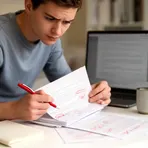
To read something again carefully to find mistakes

Carefully examine and discuss a topic, often when it is difficult or unpleasant
Antonyms

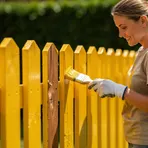
How Careful
- US
70
6.2
 28
5.5
353
1.1
∞
1.8
1
2.7
299
1.5
28
5.5
353
1.1
∞
1.8
1
2.7
299
1.5
Surface Forms
Morphology
The phrase is fully compositional: 'pore' already means to read or examine carefully and the particle 'over' adds a sense of thoroughness or attention, so the combined meaning is directly derivable from the parts. This verb+particle pattern is a common, predictable construction in English (and has parallels in other languages), so a B1 learner who knows both constituents would understand 'pore over'.
Etymology
Pore over comes from the picture of someone leaning close to a book and looking very hard at every small detail; pore suggests a very close look and over shows attention moving across the page. So, it means 'to read or study something very carefully'.