
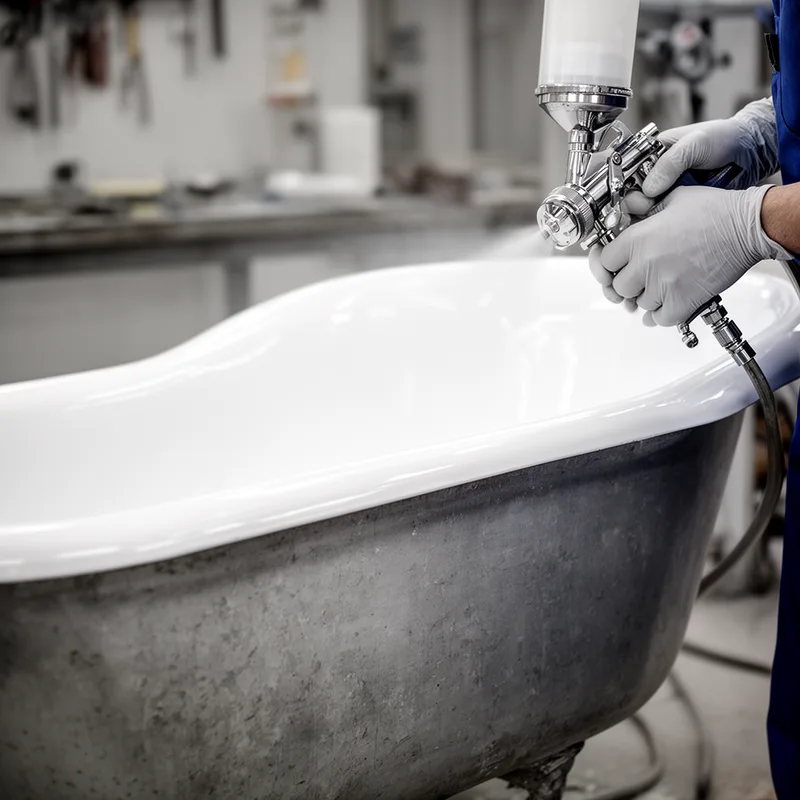
to porcelainize
- verb
- /ˈpɔːrsləˌnaɪz/
- Specialized
- Technicians carefully porcelainize the surface to improve its appearance and durability.
Examples
-
The laboratory will porcelainize the metal crown to match the surrounding teeth.
-
They porcelainized the surface of the tile to give it a glossy finish.
-
Many antique bathtubs were porcelainized to give them a smooth, glossy finish.
-
They decided to porcelainize the new pottery.
-
The artist porcelainised the vase beautifully.
-
The cookware is porcelainized, making it easier to clean after use.
-
To improve durability, the manufacturer porcelainized the metal components.
Synonyms
 3
6.5
3
6.5

To cover a surface with a hard shiny layer for protection or decoration

To put a new shiny layer on a bowl or bathtub to make it look new
How Porcelain-Like
- Specialized

 1
9.8
1
9.8

- Specialized
25
4.6
854
1.0
105
2.8
Surface Forms
Morphology
Etymology
Porcelainize comes from porcelain, the smooth white pottery that is shiny like a shell, and the ending -ize, meaning 'make' or 'become'. So to porcelainize something is to 'make' its surface like porcelain, smooth, hard, and glossy.