
polar front
- noun
- /ˈpoʊlər frʌnt/
- Specialized
- Even in the belt of the polar front (50 degrees N to 60 degrees N), precipitation increases only slightly before decreasing in higher latitudes.
Examples
-
The fisherman checked the chart to track the movement of the polar front, which indicated changing weather patterns.
-
Longer duration, lower intensity storms are triggered in the fall and winter by southward moving continental polar fronts.
Academic text (1998) -
If cold polar fronts arrive before a protective mantle of snow is on the ground, plants and animals freeze.
Academic text (1991) -
The weather forecast predicted that a cold polar front would bring snow to the region over the weekend.
-
Meteorologists explained how the warm air rising over the polar front can lead to the development of severe storms.
Synonyms

 70
5.1
70
5.1

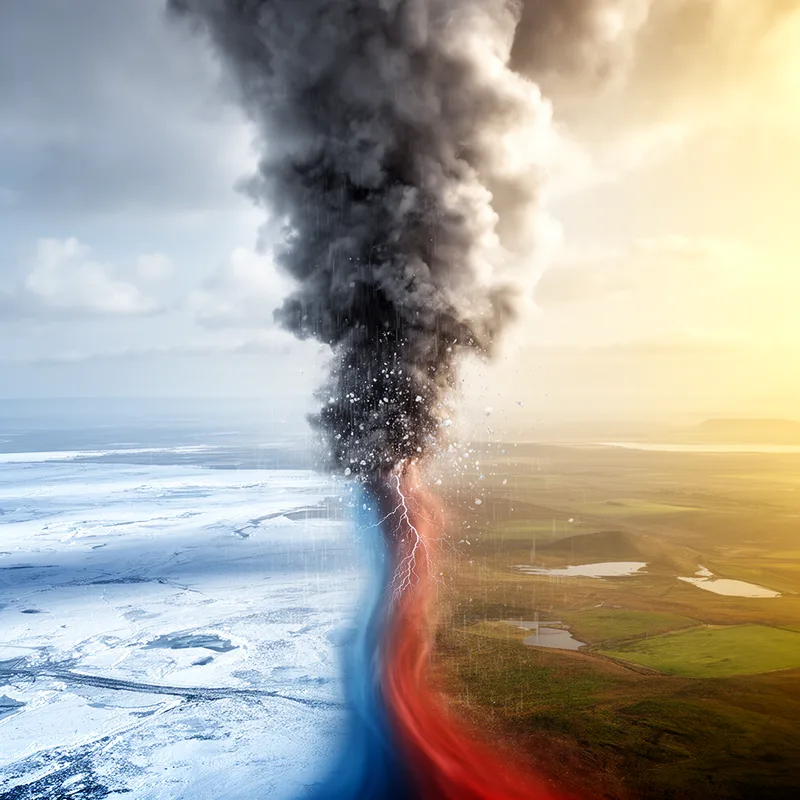
The line where two types of air meet and change the weather
How Cold

Surface Forms
Morphology
The meaning is directly compositional: 'polar' specifies the cold/polar source and 'front' is a meteorological boundary, so a learner who knows both words can infer it denotes the boundary between polar air and warmer air. This noun–noun combination follows common cross-linguistic weather terminology (e.g., Spanish 'frente polar', French 'front polaire'), making it immediately understandable rather than idiomatic.
Etymology
Polar front names the invisible line where cold polar air meets warmer air from the south, like two different air teams facing each other. When these two types of air meet at the front, they push up and make clouds and storms, so the term means the 'boundary' that often brings bad weather.