
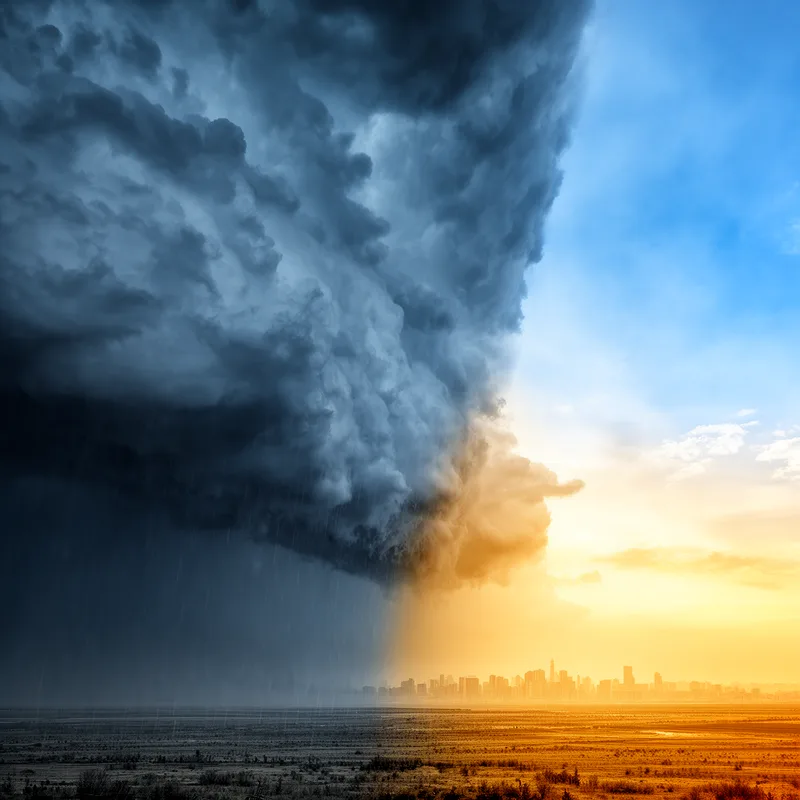
cold front
 19
3.3
19
3.3

- noun
- /koʊld frʌnt/
- Specialized
- We do have another cold front making its way closer to the area.
- cold front moving
- cold front passes
- cold front pushes
Loading YouTube…
Watch on YouTubeAnd then like cold, what happens at a cold front meets a hot front or a warm front and it discharges, begins discharging lightning, starts discharging plasmas, right.
- And then like cold, what happens at a cold front meets a hot front or a warm front and it discharges, begins discharging lightning, starts discharging plasmas, right.
Examples
-
Then the cold front came through, bringing storms and lots of rain.
Blog text (21) -
There's a cold front coming through today.
-
Low pressure systems are moving up, so expect a cold front.
-
Massive cold front is moving in from the north.
-
A cold front is moving in so...
-
Thursday, we had a cold front come through and put an end to it.
Blog text (25) -
The last cold front of the season came through in March.
Fiction book (1997) -
There's a cold front coming in.
-
Tomorrow, a cold front coming down from Canada and a warm front coming up from the Gulf could collide and cause some precipitation.
-
As temperatures drop, the cold front will push through, bringing a chill to the evening air.
Antonyms
How Cold

Surface Forms
Morphology
The meaning is directly and compositionally derived from 'cold' (colder temperature) + 'front' (an advancing boundary), so a learner who knows both words can infer it refers to the leading edge of a colder air mass. The adjective+noun combination follows a common, cross-linguistic pattern for meteorological terms, making the concept predictable to B1 learners.
Etymology
Cold front comes from weather talk: imagine a cold area of air with a clear front, like a wall, moving forward and pushing away warmer air. That's why the phrase means the 'leading edge' of colder air that brings a quick drop in temperature and a change in the weather.