
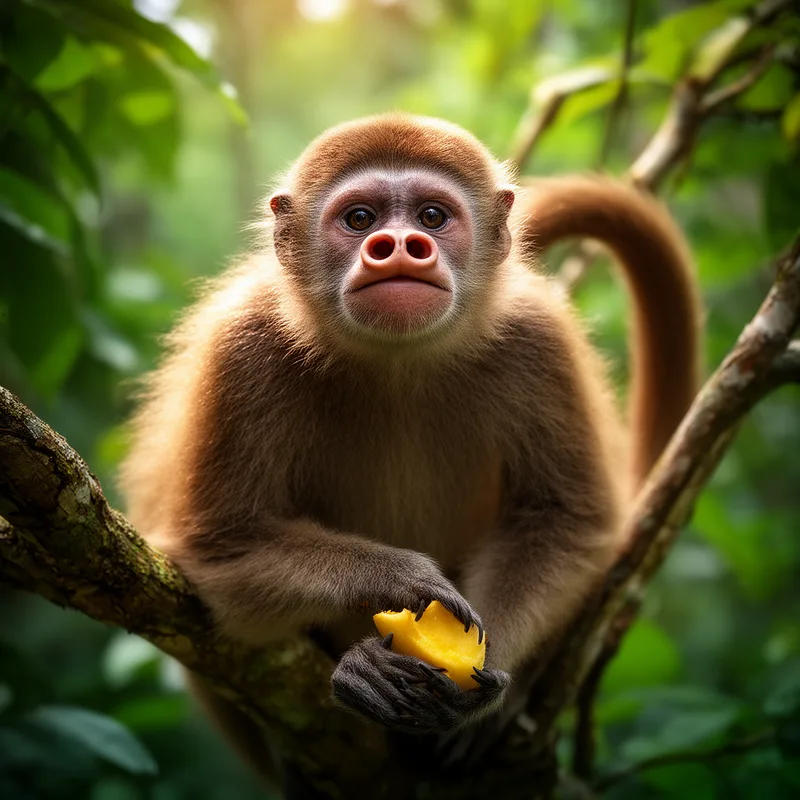
platyrrhinian
- noun
- /ˌplætɪˈrɪniən/
- Specialized
- Spider monkeys are a well-known type of platyrrhinian found in South America.
Examples
-
Researchers observed the feeding habits of various platyrrhinians in the rainforest canopy.
-
The main difference between a platyrrhinian and a catarrhine monkey lies in the shape and position of their nostrils.
-
The platyrrhinian species are fascinating to study.
-
I saw a platyrrhinian monkey at the zoo.
-
Many platyrrhinians use their prehensile tails to swing between branches in the trees.
-
The platyrrhinian species, such as howler monkeys, are known for their distinctive vocalizations.
-
In Central America, scientists study the behaviors and habitats of various platyrrhinians to understand their ecology.
Synonyms

 1
5.9
1
5.9

A monkey from Central and South America with a flat nose and often a tail that can hold things

A monkey from Central and South America with a broad, flat nose and a tail that can hold things
Surface Forms
Morphology
platyrrhinian = platyrrhine (opaque) = platy + rrhin + ian
Derivation from the base noun/adjective 'platyrrhine' by adding '-ian' is a regular nominal/ adjectival formation.
Etymology
Platyrrhinian is named from the Greek parts platy- 'broad' and -rrhin- 'nose', as in rhino, so it literally means a 'broad-nosed' New World monkey with widely separated nostrils.