
plasminogen


 1
9.9
1
9.9
- noun
- /plæzˈmɪnədʒən/
- Specialized
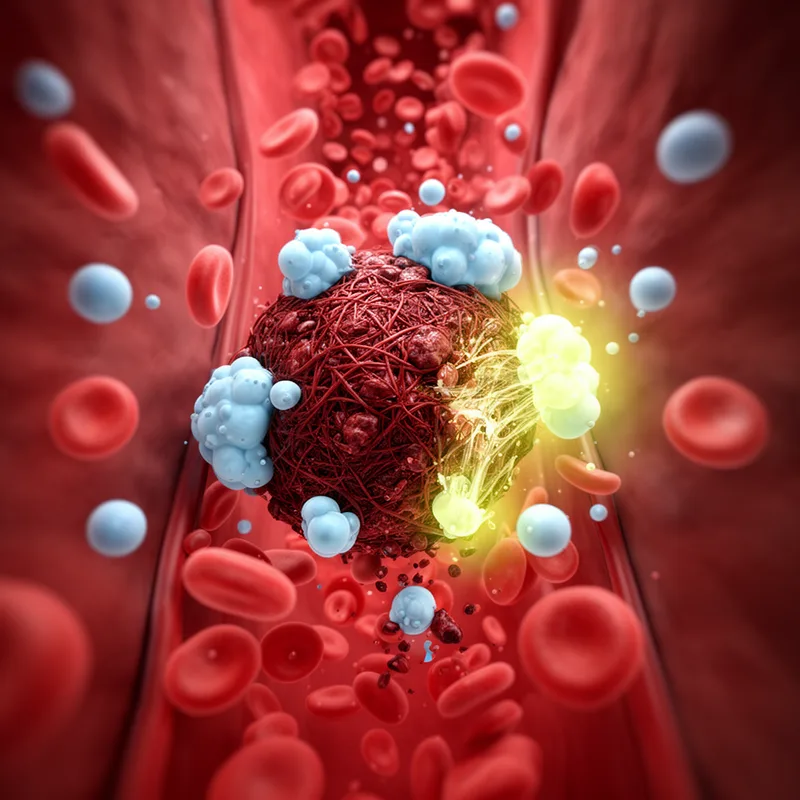
- Plasminogen is an inactive protein that converts into plasmin, which helps dissolve blood clots.
- plasminogen activator
Examples
-
Xigris also restored endogenous fibrinolytic potential, as evidenced by a more rapid trend toward normalization in plasminogen levels and a more rapid decline in plasminogen activator inhibitor-1 levels.
Academic text (2005) -
Tissue plasminogen activator was found to be cost-effective when used within 6 hours of ischemic stroke and when compared to streptokinase.
Academic text (2018) -
Furthermore, ROCK inhibitor treatment antagonized the expression of tissue factor and plasminogen activator inhibitor-1 in lung tissue and HPMVECs.
Academic text (2018) -
Keywords: Endovascular procedures; Fibrinolytic agents; Middle cerebral artery; Stroke; Thrombectomy; Tissue plasminogen activator.
Academic text (2015) -
The use of vasopressin has been hampered by its side effects, such as myocardial ischaemia, peripheral vascular disease, and the release of plasminogen activator and factor VIII.
Academic text (1995) -
Xigris also restored endogenous fibrinolytic potential, as evidenced by a more rapid trend toward normalization in plasminogen levels and a more rapid decline in plasminogen activator inhibitor-1 levels.
Academic text (2005) -
The doctor explained that plasminogen plays a crucial role in the body's ability to manage blood clots.
-
In patients with clotting disorders, low levels of plasminogen can lead to increased risk of thrombosis.
Compounds

- Specialized
A substance made by the body that helps break down blood clots

- Specialized
A medicine that breaks up blood clots to treat heart attacks and strokes
Surface Forms
Morphology
Etymology
Plasminogen combines plasma (the 'liquid part of blood') with the ending -ogen (meaning 'that which becomes') and points to plasmin, the active substance that dissolves clots. So plasminogen is the inactive form in blood that 'becomes' plasmin, which helps remove dangerous blood clots.