
plasmid
 5
8.4
5
8.4

- noun
- /ˈplæzmɪd/
- Specialized
- All the isolates harbored at least one plasmid (range: 1-4) and exhibited 12 distinct plasmid profile patterns.
- plasmid profile
- genes into a plasmid
- plasmid-borne resistance
Examples
-
Plasmids are often used in genetic engineering to introduce new genes into plasmids.
-
The entire coding sequences of the mutant plasmids were confirmed by direct sequencing prior to functional studies.
Academic text (2018) -
The vector is what the plasmid DNA is commonly referred to.
-
You can basically make a human cell culture and add plasmids to that human cell culture that contain the things that you want to test.
-
Well, I talked about the problem of using plasmids in gene therapy.
-
Basically, she will alter the DNA in a plasmid in a cell of Escherichia coli.
Fiction book (2000) -
The researchers found that the marked plasmid spread quickly among chickens that were fed subtherapeutic levels of tetracycline.
Academic text (2000) -
The genes are commonly carried on extrachromosomal plasmids that are transferred to other microbes through conjugation.
Academic text (2000) -
COS7 cells were plated on glass coverslips and transfected with plasmids encoding the proteins of interest.
Academic text (2016) -
In vitro, they can be delivered by transient plasmid transfections or viral transduction for long-term silencing.
Academic text (2016)
Synonyms


 1
4.6
1
4.6
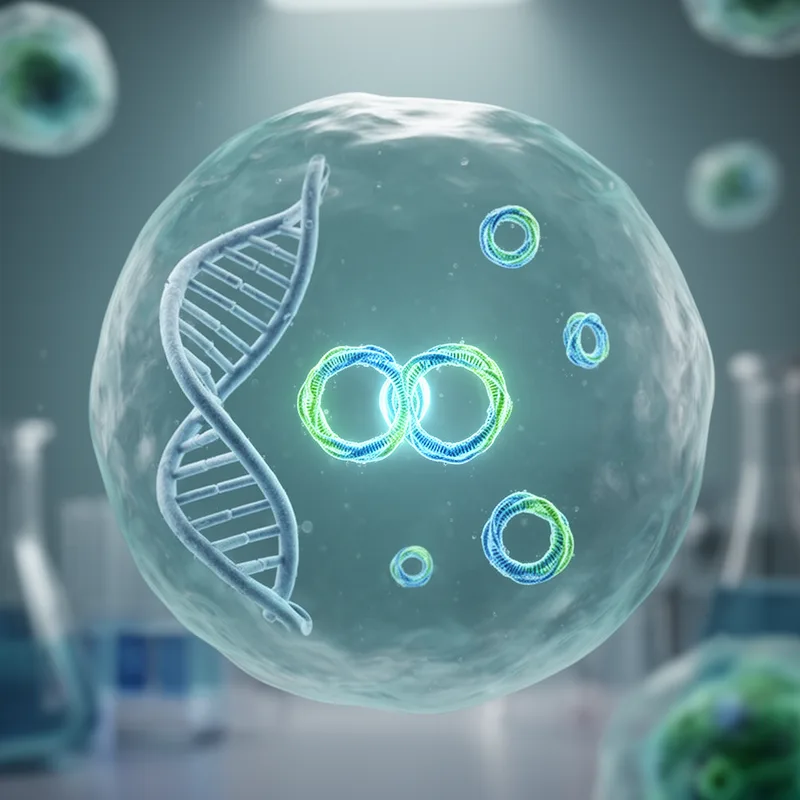
A small circular piece of DNA in cells that copies itself separately from the cell's main DNA
Compounds
- Specialized
1
4.6
A small circular piece of DNA in cells that copies itself separately from the cell's main DNA
Surface Forms
Morphology
Etymology
Plasmid comes from the Greek root plasma meaning 'something formed' and the ending -id meaning 'like' or 'small form'. Think of plastic, from the same root and meaning 'able to be shaped', to remember that a plasmid is a small piece of DNA formed separately from the main chromosomes.