
plasma membrane
 1
4.5
1
4.5

- noun
- /ˈplæzmə ˈmɛmˌbreɪn/
- Specialized
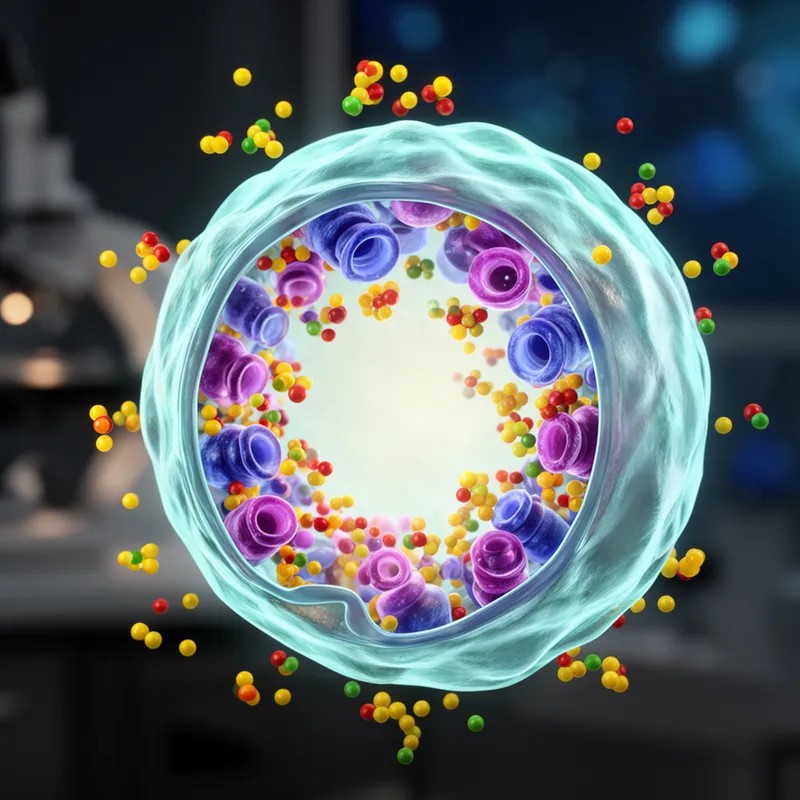
- Phospholipids in the plasma membrane create a barrier that separates the cell's interior from the outside environment.
- plasma membrane function
Examples
-
And then distal to the plasma membrane is this structure here.
-
Inside the plasma membrane there is the cytoplasm that is like a thick minestrone soup.
-
You have a plasma membrane and a cell wall.
-
At the cellular level, alterations to the nucleus, mitochondria, and the plasma membrane are among the most apparent morphological changes.
Academic text (1998) -
Thus, sperm viability, measured as the integrity of the plasma membrane after exposure to SIN-1 for 4 h and for 24 h, was analyzed.
Academic text (2018) -
Pre-S1 also binds to the liver plasma membrane, yet it is not liver specific, for it also binds to mononuclear cells.
Academic text (1994) -
The current recommendations suggest considering as dead cells those that either exhibit irreversible plasma membrane permeabilization or have undergone complete fragmentation.
Academic text (2018) -
The plasma membrane controls what enters and exits the cell to maintain homeostasis.
-
The structure of the plasma membrane is essential for cell communication and nutrient transport.
Synonyms
 74
4.5
74
4.5
A thin, flexible layer that covers or separates parts of a living thing and acts as a barrier in technology
 4
3.6
4
3.6
A thin flexible outer layer around a cell that controls what enters and leaves

A thin cover of two layers around a cell that controls what goes in and out
Surface Forms
Morphology
While 'membrane' clearly denotes a thin separating layer, 'plasma' here has a technical biological sense (cellular/cytoplasmic) rather than the everyday 'blood plasma', so a B1 learner who only knows common meanings may not infer the specific cell-boundary meaning. The phrase is partly compositional (a membrane associated with plasma) but requires domain knowledge of cellular terminology to be fully understood.
Etymology
Plasma membrane joins plasma, an old word for the cell's liquid, and membrane, which means a thin 'skin'. So the name gives a clear image: a thin, skin-like layer around the cell that controls what goes 'in' and 'out'.