
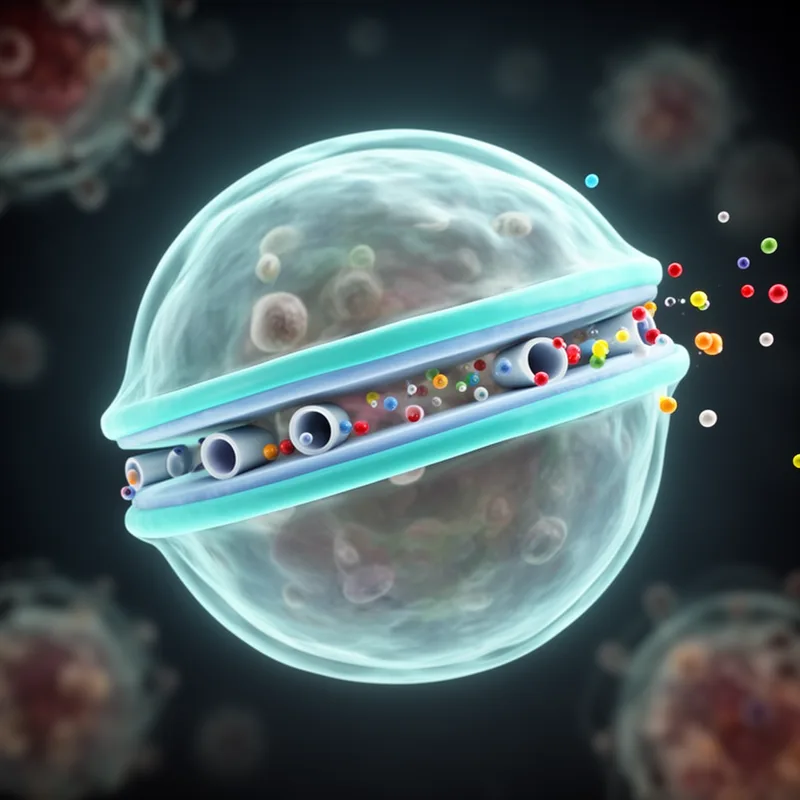
cytomembrane
- noun
- /ˌsaɪtəʊˈmɛmˌbreɪn/
- Specialized
- The cytomembrane plays a crucial role in regulating what enters and leaves the cell.
Examples
-
Researchers studied how certain drugs interact with the cytomembrane of human cells.
-
The cytomembrane regulates what enters and exits the cell.
-
Damage to the cytomembrane can disrupt vital cellular processes.
-
In plant cells, the cytomembrane is crucial for maintaining structure.
-
The cytomembrane controls the movement of nutrients and waste products in and out of the cell.
-
Damage to the cytomembrane can lead to cell death and dysfunction.
-
The structure of the cytomembrane allows it to selectively permit certain substances to pass.
Synonyms

 4
3.6
4
3.6

A thin flexible outer layer around a cell that controls what enters and leaves
 1
4.5
1
4.5
A thin flexible layer around a cell that controls what enters and leaves it
Surface Forms
Morphology
Etymology
Cytomembrane comes from cyto- meaning 'cell' and membrane meaning 'a thin skin'. So a cytomembrane is like the cell's thin skin that controls what goes 'in and out'.